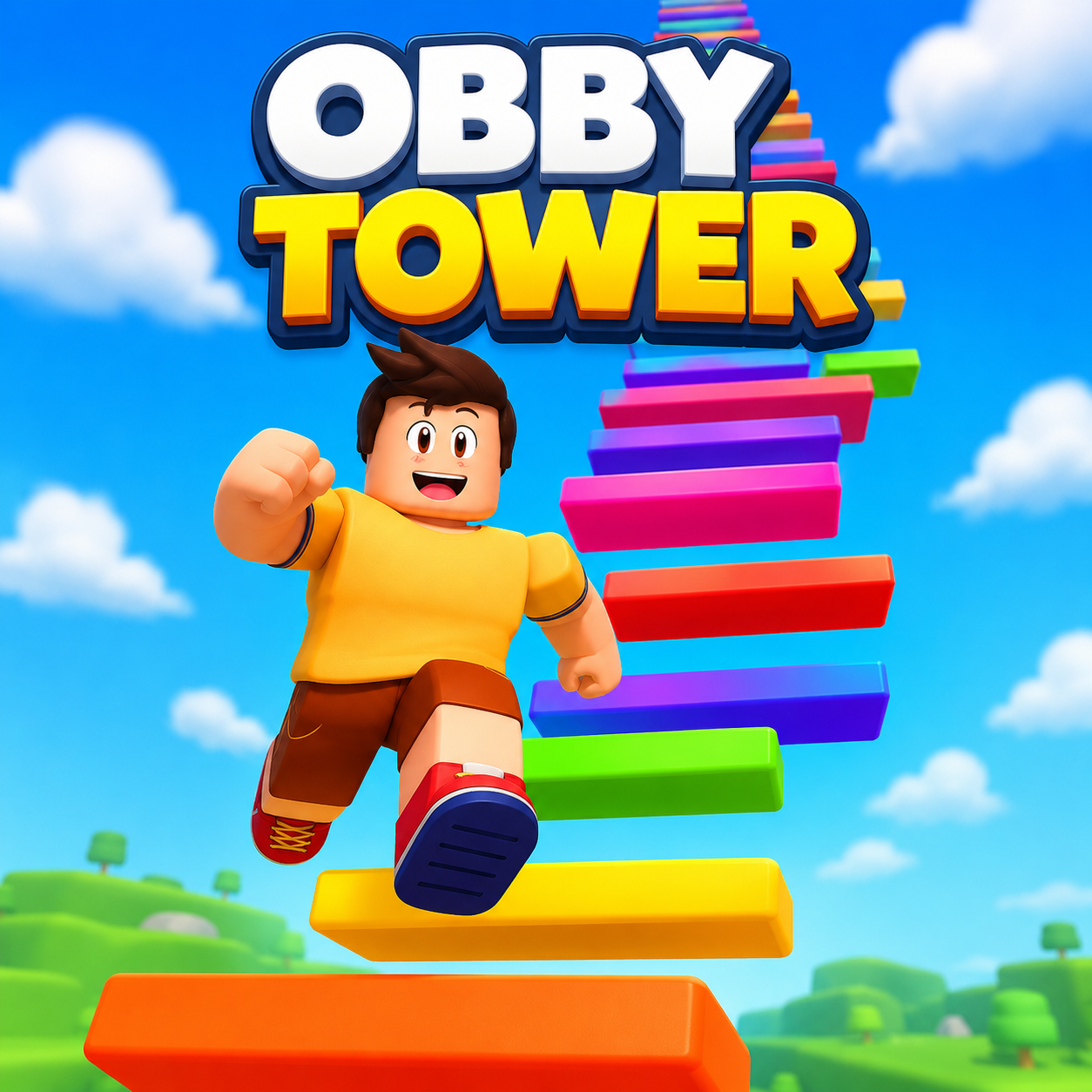
Obby Tower
New Recommended Games
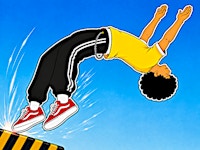
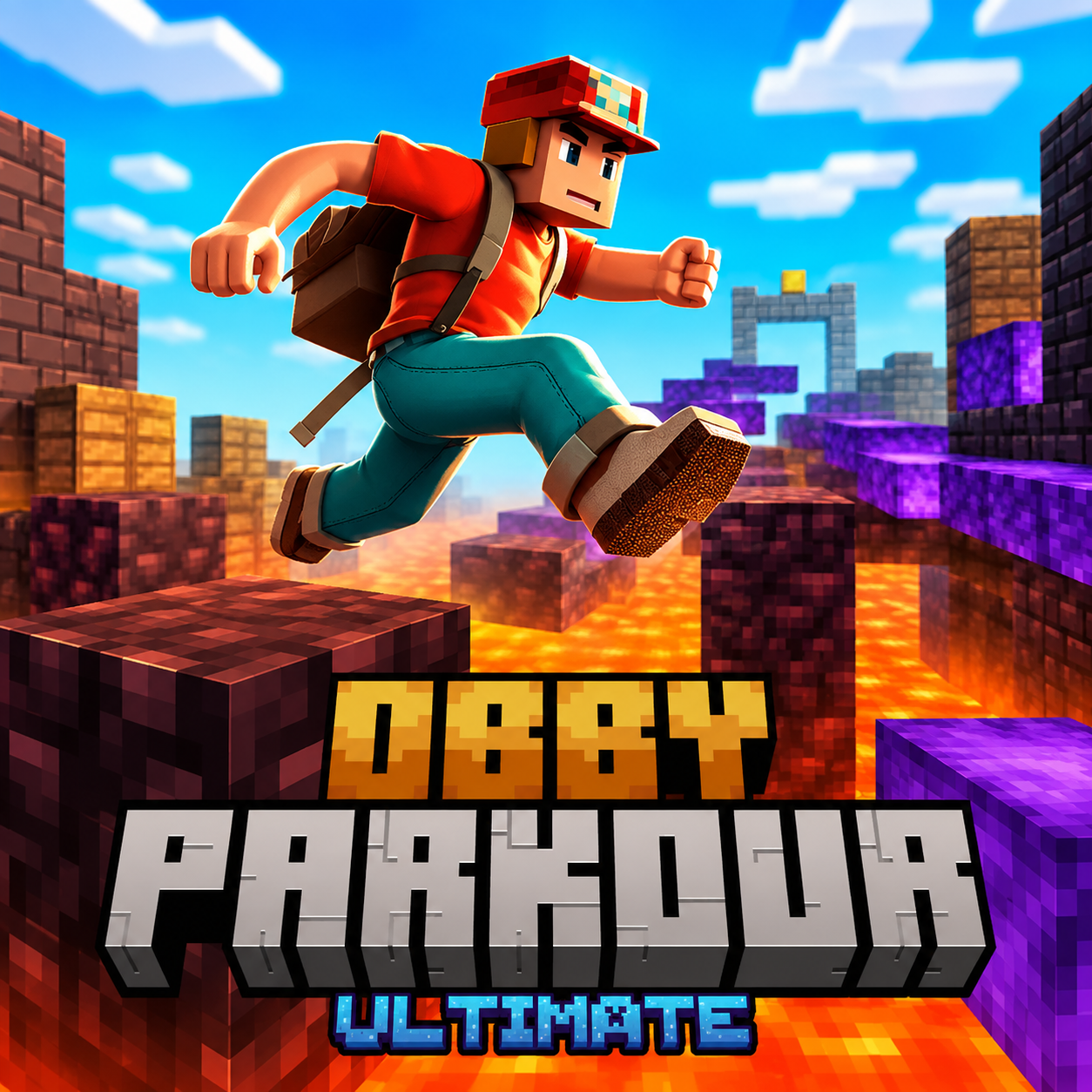



Obby Tower offers a singular combination of exacting platform mechanics and puzzle-based thinking, establishing itself as a challenge that measures both physical control and mental sharpness. The experience places players inside a three-dimensional course high above the ground, where the route consists of a series of airborne stages, each introducing its own distinct set of barriers. In contrast to conventional parkour-style games that depend purely on timing and quick reflexes, Obby Tower weaves elementary arithmetic puzzles directly into the level design, forcing players to compute answers in order to open gates or identify the appropriate platform. This design produces a flow that moves between straightforward jumping segments and moments of focused reasoning, delivering a distinctive gameplay encounter within the genre.
The structure is intended to be approachable for beginners while still providing a meaningful difficulty curve for experienced players. By splitting the lengthy course into segments punctuated by checkpoints, the creators have reduced the frustration commonly associated with obstacle-course games, where one missed leap can erase substantial progress. Participants can decide how much challenge they want by selecting from multiple difficulty presets, which makes the experience customizable. Obby Tower is not merely a test of reflexes; it serves as a thorough workout for spatial perception, body awareness, and the capacity to stay calm under stress, making it an attractive option for players who enjoy mastering mechanics and tackling layered obstacles.
To succeed in Obby Tower, players need both strategic planning and quick reactions. One of the most important factors is camera control; it is nearly impossible to judge a jump accurately if the destination platform is not visible. It is recommended to reposition the camera first so that the next target is clearly framed. Always activate a checkpoint before taking risks, since direct contact with the marker is required—being close to it is not enough. A fall after passing a checkpoint can still erase progress, so always verify that the checkpoint has rotated and updated your respawn point.
Manage your sprint meter carefully. Sprinting constantly across a floating course makes it much harder to make last-second corrections. Reserve the sprint function for specific long-distance jumps; using it at the wrong time can cause you to overshoot a small platform. Camera placement is a key factor in jump accuracy. Additionally, take a moment to pause and work through the puzzle solutions. The arithmetic itself is not the main obstacle; the real challenge is solving it while maintaining your positioning and confidence. Before making a choice, try to find a stable area where you can land and think.
If you are new to the game, start on Easy difficulty. This setting lets you build familiarity with jump distances and control mechanics without being overwhelmed by environmental hazards. Keep in mind that hard modes do not simply increase numbers—they can alter the course layout and the number of obstacles, demanding much greater precision and timing. Also, if you fall, do not panic. The checkpoint system is designed to minimize the setback. Take a moment to check your position using the progress bar and evaluate the next section; mentally rehearsing a difficult jump or puzzle can greatly improve your consistency. Finally, use the pause function (accessed via Enter) to rest or inspect the situation without any time pressure.
A: Obby Tower is a 3D platforming experience that blends precision movement challenges with straightforward arithmetic puzzles. Your main goal is to traverse an extended sequence of floating platforms, navigate past various hazards, and ultimately arrive at the final destination.
A: This game relies on far more than simple leaping. Certain segments will challenge your ability to control momentum and direction, while others require you to compute an equation before you may proceed. Checkpoints split the path into smaller, more manageable portions, so a single mistake does not necessarily wipe out your whole progress.
A: Prior to launching the game, you are able to pick between two distinct tracks: Playground and Rainbow. Each track provides its own individual layout of vibrant platforms, open gaps, hazards, and moving components.
A: You may opt for Easy, Medium, or Hard. Easy is the ideal option for newcomers who want to learn the fundamentals and judge how far each leap carries them. As your maneuvering becomes steadier, Medium and Hard offer a greater test of timing and exactness.
A: You will come across trap doors, spinning bars, slender walkways, and moving parts. Some leaps can be made safely from a stationary stance, but larger distances may call for a quick run to gain extra speed.
A: The positioning of the camera is every bit as crucial as your own movement. Before making a jump, rotate the view toward your intended target and verify that your character is facing correctly. If the angle is off, you may overshoot the landing even if your distance calculation was spot on.
A: No. Reserve the sprint action for situations where added momentum is truly required. If you keep sprinting without pause, halting on narrow platforms becomes difficult, and you are much more prone to slipping past the edge.
A: The math problems can appear in three different styles:
A: The arithmetic itself is not difficult, but it does break the flow of the obstacle course. Take your time, examine the full equation carefully, and find the answer before choosing the proper gate or marked platform.
A: Checkpoints appear as spinning letter "C" markers. Run into the marker to trigger it, which then saves your current spot. Should you fall afterward, you can continue from that latest activated point rather than moving back to the start.
A: Absolutely. You need to make physical contact with every checkpoint that you encounter. Merely being close to the marker will usually not count as activation.
A: A progress indicator along the top portion of the display reveals how much of the track you have already finished. Rely on it to predict the amount of course left, so you can prepare for the harder sections ahead.
A: Here are the control bindings:
A: Yes. To shift between the two perspectives, simply press the V key.
A: Some comparable games you might enjoy are:
A: Obby Tower is classified as an Adventure, jumping, 3D, parkour, and skill title.
A: In the event that you fall after activating a checkpoint, you will be able to start again at that recent point, rather than having to redo everything from the very beginning.
The fundamental gameplay cycle in Obby Tower revolves around traversing a floating realm through accurate leaps, measured dashes, and deliberate problem-solving. At the outset of each attempt, the participant is required to pick a course setting, with the two starting choices being Playground and Rainbow. Every setting offers a distinct arrangement of barriers, hazards, and visual aesthetics, which in turn shapes the overall feel of the session. Subsequently, the player must choose a level of difficulty—Easy, Medium, or Hard—that directly impacts the intricacy of the platforming and the way obstacles are laid out.
The core interaction is built upon two interconnected activities that happen simultaneously. Character movement relies on conventional first-person controls, compelling the player to convert their understanding of space into precise inputs. Being able to judge the distance and angle of a jump is absolutely critical, given that platforms differ in size and some may shift or contain obstructions. A central element of mastering the game lies in learning when to use the sprint function. This ability grants the additional forward thrust needed to clear wide gaps, yet it also heightens the chance of overshooting narrow ledges, so its deliberate application becomes a fundamental skill to cultivate. Additionally, the title forces the player to pause and solve arithmetic problems that appear as barriers or on-screen instructions. This feature compels a shift in mindset, demanding that the player remain calm and perform calculations while positioned in a risky three-dimensional setting.
Progression is safeguarded by checkpoints, which are marked by a rotating letter "C" placed along the route. When the player makes contact with these markers, the game state is saved, meaning that a misstep will cause a respawn at that location rather than at the very beginning. Beyond the obvious parkour challenges, the player must also choose among several multiple-choice platforms, each leading to different outcomes. This cross-disciplinary method—merging physical action with rapid mental arithmetic—is what gives the game its particular level of challenge. The settings and control menus allow the user to alter the camera perspective, which can prove essential for certain jumps or for getting a better view of a puzzle.