Endacopia
New Recommended Games















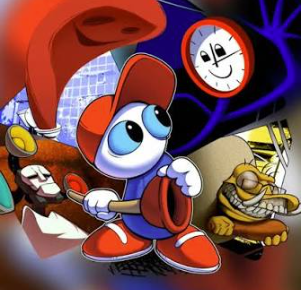
Endacopia distinguishes itself as an unconventional point-and-click role-playing experience, deliberately constructing a state of contradictions by merging the whimsical, animated charm of nostalgic children’s games like Pajama Sam with the troubling, obscure atmosphere of contemporary mystery-horror titles analogous to Petscop. Within the presently offered sample, players meet a boy named Mellow, a young wanderer stranded in a peculiar and mildly hazardous environment that operates under its own unique—and often unfathomable—rules. Taking on the role of his heavenly guardian, the player walks him across these odd territories, attempting to COOPERATE and lead him through curious situations and individuals he comes upon. The game’s intention goes beyond simple forward progress: it asks the player to truly grasp the world’s oddities, address its confounding predicaments, and ultimately discover a destination where Mellow can feel at ease. This overarching journey is firmly rooted in investigation, solving interactive puzzles, engaging strange personalities, and absorbing an atmosphere thick with disquieting nuances softened by charming narration. Enthusiasts of slow-paced, curiosity-centric storytelling will find a satisfying juxtaposition of frivolous comedy and hauntology, giving the title a quality that never fully surrenders to either tone—even while embracing both.
Among Endacopia’s primary differentiators is its paradoxically blended tone, which balances a leisurely comedic facade with an undercurrent of suspense that remains ever-present. The game refuses to align itself with any typically categorized, a stylistic decision that enables fans of playful point-and-click trivia and grim narrative-puzzles alike to discover something they relate to. The universe is filled with odd, unintentionally entertaining figures, whose mixed responses to participant’s choices make each exchange a source of comic relief and also dread—often in the same interaction.
Exploratory satisfaction is achieved by the meticulous manual crafting of settings, with every location featuring close attention to detail that acts as wordless indicators, layering stories, or detached curiosities. Despite its strangeness, the world remains internally consistent, and the distortions in its laws only add to the dream-like singularity. For that reason, the game is not merely an assembly of obstacles; instead, it prioritizes environmental narratives, where walls, objects, and overlooking visuals communicate information just as effectively as explicit dialogue. The player who takes time is rewarded with faintly embedded data. Additionally, throughout the journey runs a cohesive, enigmatic narrative thread that keeps recipients perpetually guessing about the precise nature of Mellow’s displaced reality. It is also worth mentioning that even in this early build, the fundamentals pillars for a satisfying full production are already clearly in place; once the entire concept comes to completion, it is and the story promises to be much more layered.
To gain the full benefit from your time with Endacopia, an advisor would recommend a calm, systematic approach. Being sluggish is completely fine; the game exceptionally values observation rather than rushing through the screen. First, thoroughly investigate every target object of interaction scene you encounter. Forget singular elements—curious ornaments, idiosyncratic decorations, or seemingly irrelevant glimpses—these might actually be essential clues to resolve a puzzling problem. Second, if you reach of, you must step back and think: go back to previous locations, observe whether some scenes have something different than before, and actively test previously acquired objects to see if they reveal something unexpected. Re-examine conversations and correspondence one may have treated, since apparently crazy ramblings could contain the actual key hint.
Another key detail is to remember that the universe of Endacopia operates according to its own logic, yet does not mean that answers are generated at random. Solved the tricky puzzles require careful examination of context and cross-referencing consistency between various locations. If progression becomes elusive, the typical reason is that you have not yet combined any those observations—search beyond your current view rather than holding to a single less apparent hypothesis.
Additionally, pay attention in atmosphere; the shift from humorous to threatening can be harsh. Even if objects appear harmless, you might want to test them, as their unexpected responses could be either hilarious or externally consequences. For anyone who comes in, the correct approach is to enjoy the ride and set aside any idea that something is trivial common sense. Since the current build of the game is still shortened-a demo in essence-a period, players meet only a fractional version of the populated world; offering one’s continued support and constructive engages may have a direct influence on continued development. With plans for the complete edition to be more challenging and narrative richer, the only way to see the full mystery revealed is to follow through. Indeed, Endacopia provides a distinctive cocktail of standing, entertainment, and tension; a true treasury for those who value narrative-driven point-and-click experiences.
A: Endacopia is a distinctive point-and-click adventure that combines the humorous whimsy of Pajama Sam with the unsettling, enigmatic mood of Petscop. A playable demo is currently available.
A: The central figure is Mellow, a young child who has wandered into a strange world filled with unusual and unexpected rules.
A: The player serves as Mellow's guardian angel, helping him make sense of his surroundings, tackle challenges, and eventually reach a place he can truly call home.
A: The primary goal is to lead Mellow through a series of interconnected areas, gather clues about his bizarre environment, assist him in resolving obstacles, and guide him toward a path that leads to safety and comfort.
A: Exploration is carried out by moving the cursor around the environment and clicking on objects, inhabitants, and notable places. Many commonplace items may hold useful details or become relevant much later, so thinking carefully about everything you see is encouraged.
A: When Mellow reaches a barrier or obstacle, take time to search the nearby surroundings for helpful items and obvious hints. Interact with anything that looks interactive, and pay close attention to readings, descriptions, and peculiar details. Solutions are not always straightforward, and going back to earlier locations to try overlooked objects can make all the difference.
A: As Mellow's guardian angel, your task is to guide him forward in ways that are not strictly outlined. You are free to think imaginatively about what he might need and then experiment with various interactions to see how characters react. There is no need to hurry, and simply taking time to observe the environment can be more useful than blindly clicking everything.
A: Definitely. Search every reachable spot and inspect anything that seems out of the ordinary. Keep track of essential clues and objects, especially when a puzzle feels unsolvable. If you reach a stopping point, go back to earlier areas and look for novel ways to interact with previously ignored items.
A: Endacopia is currently offered in demo form, so the experience you can play now is only a fraction of what the creators have projected for the finished release.
A: Anyone who enjoys this mysterious world can aid the project's continued growth through its Kickstarter promotion, helping the team bring more of the story to life.
A: Endacopia presents a delightful and atmospheric journey across strange environments, puzzle discovery, odd personalities, and absorbing storytelling. It balances lighthearted humor with eerie tension, giving players both exploration-driven curiosity and thoughtful puzzle interactions.
A: If progress comes to a halt, look around later, or earlier, to places you've already visited and retest anything that allowed blocking. Valuable information gathered from unrelated spaces often combines in surprising ways to reveal what you need.
A: Yes. Remember everything you hear, even minor or perspective comments, because seemingly quiet remarks in dialogue can provide important clues that guide you through difficult moments.
Endacopia adopts the familiar and intuitive framework of classic point-and-click adventure. From a first-person vantage point, the user’s main task is to move the cursor across scenes, selecting any objects, personages, or scenery that appear noteworthy. Progression comes from thorough inspection of the area, activating interactive zones, and absorbing every piece of text or dialogue, whether they are environmental descriptions or voice lines delivered by the characters. However, the goal remains subtle: each room contains indications and scattered narrative fragments that together paint a clearer portrait of Mellow’s universe. Consequently, you slip into the role of a guiding presence, keeping a watchful eye over Mellow at every step, anticipating what he might require in his present circumstances, and experimenting with different ways for him to play a part in his environment.
Puzzle-solving serves as the very core of the experience. When Mellow runs into a barrier, whether it's a jammed door or an enigmatic gadget, the answer frequently lies left across the environment. The player is strongly encouraged to scrutinize anything that seems just a little unusual, cognitively recognizing details that could initially appear meaningless and making use of that knowledge later on. The title's logic is occasionally odd, even dreamlike, and some obstacles cannot be solved sensibly right away; they may call for an abstract leap of reasoning, a random spike of intuition, or recalling a certain offhand comment delivered weak by an character earlier in the quest. As soon as forward is impossible, the most effective approach is to backtrack. Revisiting previously explored places will reveal new opportunities to interact after a puzzle has been completed elsewhere or once you have developed more background. The demo imposes no rush; a pause to oversee the world frequently proves more rewarding than clicking through quickly by the time.