
Lazy Bear
New Recommended Games


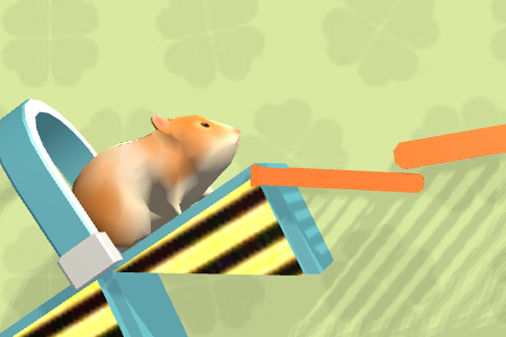

















In the realm of physics-based puzzle games, few premises are as deceptively simple and simultaneously absurd as that of Lazy Bear. This single-player experience, also known as La Madriguera, presents players with a profound question: how far would you go for a slice of cake if standing up was completely out of the question? The answer, as it turns out, involves a remarkably intricately designed set of interactions with the environment, all built around one core, immutable rule – the bear must never leave his cozy chair. As an online game available on platforms like TwoPlayerGames, Lazy Bear offers a brilliant blend of spatial reasoning, strategic manipulation, and comedic physics. It presents a sandbox of chaos where the primary objective is simple, yet the path to success is a delightful, often unpredictable, journey of trial and error. This title stands as a testament to how innovative game design can arise from the most ridiculous of premises, capturing the hearts of players who appreciate a good physics puzzle wrapped in a charming, minimalist aesthetic. Your role is to control a long, stretchy arm to manipulate a room filled with furniture, all in an effort to bring a sweet treat within reach of your perpetually sedentary companion. The entire game is a testament to the idea that sometimes, the most memorable experiences emerge from exploring the problem-solving potential within a deceptively simple environment and a rather unconventional compass.
Easy to Grasp Controls: One of the greatest strengths of Lazy Bear is its pick-up-and-play simplicity. The functionality is so straightforward that you don't need a tutorial to start exploring the game's potential and the range of actions you have available to use. This low barrier to entry allows you to fully dive into the dynamic puzzle solving without having to learn complicated commands. Both PC and Mobile users will find a familiar interface that is responsive to their inputs, ensuring that the limit to your success is not due to limited controls but only your problem-solving skills and interactive thinking. You can spend your time interacting with the world and attempting different approaches, without wrestling with controls.
Physics-Based Sandbox: Lazy Bear is a playground of physical interactions. The objects in the room are not simple static decorations; they have weight, momentum, and interact with each other in ways that can be surprisingly complex. A table can be used to push something else, or you can stack objects to climb. The openness of the interactions is what leads to endless replayability, as there is no single solution. It is a game of environmental management, where the easiest way to succeed is often just as effective as the most creative. This game uses an intuitive physics, giving the experience weight, causing your actions to feel real and the solutions to puzzle to be dictated by universal and logical rules that you learn and enjoy working with.
To master Lazy Bear, a strategic mindset is your greatest asset. When you enter a room, take a moment to assess the environment. Try to understand what potential usages the available furniture provides. Before moving items, visually map a possible path to the cake and consider how each object could be used to get there. This initial observation of the room layout can save you from unnecessary chaos. The core principle to keep in mind, however, is that the bear never stands up. This is not just a theme, a life rule. All your strategies and actions must be filtered through this lens. You are not trying to simply move the cake across the room, but to get it to the little space that is within the bear's reach from his seated position. The altitude of the surface you are building is just as critical as its path to the bear. If your objects get stuck in a messy pile, or if the cake becomes completely trapped beneath a heavy chair, do not get frustrated. Embrace the chaotic side of the game and consider restarting the level. This isn't a sign of failure but a chance to re-approach the starting condition with a brand-new strategy that you have just learned from your prior attempt. This ability to reset is a key tool to experiment without penalty, integral to discovering clever solutions.
The best players of the game are those who are willing to test out seemingly random actions. A chair that is placed wrong could be a step, a weight to hold down a rug, or just furniture. Persistence and patience are crucial, as are creativity and a good sense of fun for building a puzzle. Every failure is not a dead end but an opportunity to learn more about the physics of the game and a cautious step closer, not to a walk, but to the bear's comfortable satisfaction. Furthermore, in this context of other featured indie games, this title stands shoulder to shoulder with titles that push the idea of creative interaction. Like other recommended games in the genre, there is a heavy emphasis on unique mechanics and humorous situations, which this title embodies completely with its unique single setting, core mechanic and character design.
A: The goal is to bring a slice of cake within reach of the bear by interacting with objects scattered around the room. You pull, push, drag, stack, and knock things over using the game's physics to get the cake to the bear without him ever standing up.
A: Because he is far too lazy! The entire challenge of the game is feeding him without ever forcing him to stand up from his cozy armchair.
A: On PC desktop, you click and drag with your mouse to grab and move objects.
A: On mobile or tablet, you tap and drag to grab and move objects.
A: Embrace the chaotic physics! If the room gets too messy or the cake gets completely trapped under heavy chairs, simply restart the level to try a brand-new clearing strategy.
A: Not at all! Lazy Bear is completely free to play right in your web browser with zero installation required.
A: Lazy Bear is also known as La Madriguera.
A: It is a clever physics puzzle game where you control a ridiculously long, stretchy arm to grab, drag, stack, and toss furniture out of the way.
A: You can interact with tables, rugs, chairs, and other furniture scattered around the room.
A: The game uses realistic physics where a move that looks useless at first might start a chain reaction that sends the cake exactly where you need it or launches half the room in the wrong direction.
A: Yes, it is listed under "1 Player" category in the content.
A: The content does not specify the visual style, but it is described as a physics puzzle with a lazy bear character. The game is part of the "Fun" and "Puzzle" categories.
A: Yes, the game supports touch screen controls for mobile and tablet devices.
A: You can restart the level to try a new clearing strategy if the cake gets trapped or the room becomes too chaotic.
A: Yes, the content recommends "The MachinEGG", "Baldi's Basics", and "We Become What We Behold" as other unique indie experiences.
A: It is an industrial factory game where you build an egg-producing contraption, tap to generate resources, unlock automated gears, and evolve your mechanical factory in an idle clicker style.
A: It is a surreal, retro educational horror adventure where you explore chaotic school hallways, solve math problems, and collect notebooks while fleeing from the teacher Baldi.
A: It is a thought-provoking, five-minute point-and-click story about media influence, where you capture viral moments with your camera lens and watch how small news stories shape behavior.
A: Yes, it supports mobile and tablet with tap-and-drag controls, and it is free to play in a web browser.
A: The main challenge is using the bear's stretchy arm and the room's physics to bring the cake to him without making him stand up, often requiring creative stacking and tossing of objects.
The core gameplay of Lazy Bear revolves around a unique power: the ability to stretch the bear’s arm to incredible lengths. This limb becomes your primary tool for interacting with everything within the room. The controls are intuitive and accessible, ensuring that players of all skill levels can quickly grasp the fundamental mechanics. On a PC, the experience is handled entirely through the mouse, where you simply click and drag to grab hold of objects and move them around. For those playing on a mobile or tablet device, the same principle applies via touch controls, requiring just a simple tap and drag action to interact. The fundamental objective is to get a slice of cake to the bear. The challenge lies not in the objective itself, but in the environment as you must use a range of furniture and house hold objects ideas to build a path to reach your goal based on the specific physics of the room. You'll find yourself pulling, pushing, dragging, stacking chairs, tables, rugs, and even standing on top of precarious piles as you experiment with the game’s physics engine. This isn't a game about force and speed but about skill and equilibrium, as every move you make can have a significant effect on the world around you, and what might seem like a useless action could be the very thing that starts a chain reaction that sends the cake directly into your grasp or, more often than not depending on your actions, it launches half the objects in the room in the wrong direction. Every level is an open ended puzzle, ready for you to discover a way that works for your approach and to observe the consequences of your actions, making each successful play through a satisfying A ha! moment.