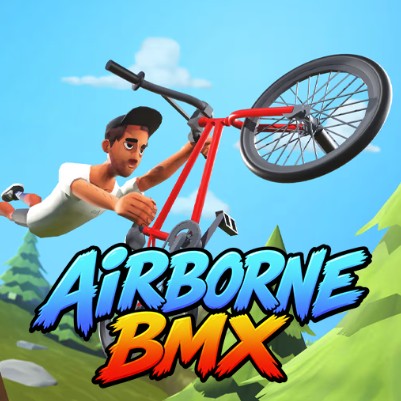
Airborne Bmx
New Recommended Games












Airborne BMX delivers an adrenaline-fueled, physics-driven side-scrolling BMX stunt racing experience, merging the excitement of high-speed competition with the finesse of executing aerial maneuvers. Designed for enthusiasts of action sports and arcade-style gameplay, the game tasks players with controlling a BMX rider as they traverse progressively challenging tracks filled with ramps, gaps, loops, and varied obstacles. The primary goal is to cross the finish line while maximizing points through precisely timed jumps, flips, spins, and combo sequences. The game’s physics engine governs realistic bicycle handling, requiring players to balance velocity with control as they accelerate, decelerate, and adjust their rider’s body position mid-air. Achieving success hinges on accurate landing timing—imperfect touchdowns diminish speed or cause crashes, whereas clean landings grant bonus points and preserve momentum. As players advance, they access new bikes and tackle increasingly complex track designs that demand swift reflexes and strategic stunt planning. Airborne BMX offers a seamless fusion of racing and freestyle stunt mechanics, delivering a replayable experience for those drawn to both competitive time trials and high-score trick challenges. The game also incorporates missions and achievements that extend its longevity, motivating repeated attempts to master each level’s distinct hurdles. Although the concept is straightforward, the richness of trick combinations and the physics-based movement system create a rewarding difficulty curve for both casual and dedicated gamers.
Airborne BMX sets itself apart with a strong collection of features tailored to action sports fans. The standout element is its physics-based bike handling, which replicates realistic momentum, weight distribution, and inertia. Unlike typical arcade racers, the bike reacts to terrain variations, compelling players to brake before sharp bends, lean into jumps, and modify posture during landings. This adds a layer of authenticity that encourages practice and skill improvement. The game includes numerous challenging levels, each with unique track layouts that grow progressively harder. Early tracks function as tutorials, introducing basic jumps and simple barriers, while later stages feature tight loops, vertical walls, and multi-tiered ramps that require precise execution. Each level is crafted to promote multiple playthroughs, as identifying the optimal path for both speed and trick points becomes a puzzle in itself. Multiple unlockable BMX bikes offer differences in performance attributes like speed, acceleration, and handling. Some bikes are better suited for trick-oriented runs (lighter frames for easier flips), whereas others prioritize sheer speed (heavier builds for downhill momentum). This choice lets players customize their playstyle. The trick system is extensive, supporting a wide range of flips (frontflips, backflips, supermans), spins (180°, 360°, 720°), and grab tricks (seat grabs, no-handers). Combos are tracked in real-time with a combo meter that builds as tricks are chained; touching the ground resets the meter, but a successful landing multiplies the entire chain’s score. Missions and achievements add replay value beyond simple completion. These tasks range from “land 10 perfect landings consecutively” to “finish a level without braking,” prompting players to try different strategies. The side-scrolling perspective offers clear visibility of upcoming obstacles, while the parallax background and vibrant color palette maintain visual clarity during fast-paced sections. Finally, the restart mechanic is immediate—pressing R resets the level with no loading screens, preserving speed and reducing frustration. This design choice is ideal for players who wish to attempt difficult sequences repeatedly to achieve perfection.
To succeed in Airborne BMX, players should keep several important points in mind. Landing is crucial—a poor landing not only loses points but may cause a crash that forces a restart. Always aim to land with both wheels simultaneously and the bike horizontal. Use the balance keys (often up/down arrows) to tilt the rider forward or backward during descent; a nose-heavy landing will trigger a forward roll, while a tail-heavy landing can lead to a wheelie that reduces speed. Practice “perfect landings” on simple tracks before tackling harder ones. Speed management is vital, as faster speeds provide less time to react to obstacles and stunt opportunities. On downhill sections, use brakes sparingly to avoid losing too much momentum, but apply them before sharp turns to prevent overshooting ramps. Conversely, on uphill sections, accelerate early to maintain enough speed for the next jump. Learn each track’s rhythm by replaying levels multiple times. Memorize where ramps are placed, the optimal takeoff angle, and the timing for trick inputs. Many tracks feature hidden routes—for instance, a ramp leading to a shortcut or a second ramp hidden behind a loop—that only become evident through experimentation. Do not overlook the balance mechanic while riding on flat ground. The rider’s weight distribution affects acceleration and stability; leaning back slightly during acceleration reduces wheelspin, while leaning forward during braking prevents endos (front wheel lockups). Trick selection matters—spins are generally easier to land than flips because they do not alter the bike’s vertical orientation as drastically. Start with basic 180° spins and progress to flips once you can consistently land them. For combos, chain a spin into a flip (e.g., a 360 into a backflip) for higher multipliers, but only attempt this if you have sufficient air time. Use the pause menu to review the trick list and practice inputs in a low-pressure environment—some tricks require specific key combinations that are easy to forget mid-run. Restart often if you feel a run is compromised; minor mistakes accumulate, so it is better to reset early than to waste time on a flawed attempt. Finally, adjust your approach for mission objectives—time trials demand a speed-focused route with minimal stunt breaks, while trick score objectives require seeking out every possible ramp and chaining as many tricks as possible, even if it slows the overall run. Maintaining a calm mindset and practicing sections methodically will yield better results than frantic improvisation.
A: Airborne BMX represents a racing and physics-driven side-scrolling BMX stunt video game characterized by high-speed gameplay. Competitors navigate demanding courses filled with ramps, gaps, loops, and barriers while executing impressive aerial maneuvers and accumulating points.
A: The aim is to arrive at the finish line by fulfilling objectives and performing mid-air tricks. Players earn scores for flips, spins, and consecutive combos while airborne, yet poor landings can reduce speed or result in a crash. Advanced stages demand quick reflexes and exact stunt timing.
A: Core features comprise rapid horizontal-scrolling action, realistic physics-based bicycle handling, dozens of challenging stages each with distinct obstacles, multiple unlockable BMX bicycles, a variety of tricks and stunt sequences, plus missions and achievements that enhance replayability.
A: Use the Arrow Keys or WASD to accelerate, brake, and maintain rider balance. Press the Spacebar to jump. Employ trick keys to execute flips and spins while in the air. Hit R to restart the current level following a crash.
A: Suggested comparable titles include Loop Crash 2, Hill Sprint, and other games such as Turbo Flip, the Sprunki series, and additional options catalogued under "More Fun Game Recommendations."
A: Game categories encompass Music Games, Puzzle Games, Casual Games, Driving Games, Sport Games, Horror Games, Halloween Games, Mod Games, Action Games, and Sprunki Games.
A: Sprunki offerings feature Sprunki 1996, Sprunki Swap Retextured, Sprunki Infected, Sprunki World Online RP, Sprunkway, Sprunki Normals and Withers, Sprunki Phase 60, Sprunki All Endings, Sprunki Coloring Page, Sprunki MegaSwap, and numerous others.
A: No. This site operates independently and maintains no affiliation with any organization. It further states that it does not own or endorse any cryptocurrency.
A: None. Any cryptocurrency asserting a connection to this website is considered fraudulent.
A: The website provides documents including "About us," "Contact us," "Privacy policy," "Term of use," and a "Copyright Infringement Notice Procedure" for user reference.
A: The primary goal is to cross the finish line while performing aerial stunts. Players must strike a balance between speed and control as they traverse steep inclines, dangerous drops, and various obstacles.
A: Points are granted for executing flips, spins, and combination moves while airborne. Proper timing, successful landings, and creative stunt sequences all contribute to the final score.
A: A poor landing can decelerate the rider or trigger a crash. After a crash, pressing R allows the player to restart the current level.
A: Later stages present more complex track designs that demand swift reflexes and precise stunt timing to attain top scores.
A: Currently trending games include Sprunki Mods, Music Games, Puzzle Games, Horror Games, Casual Games, along with specific titles such as Hexbound, Poople Game, Shape Rush, Chibi Doll - Avatar Creator, and others.
A: The site clarifies that Sprunki Incredibox Game is an independent platform with no organizational affiliations. It also explicitly denies any association with cryptocurrency entities.
A: To accelerate, brake, and maintain rider equilibrium, employ the Arrow Keys or WASD. The Spacebar serves as the jump command while airborne.
Airborne BMX commences with the player choosing a stage and a bicycle. The main goal is to traverse the horizontally scrolling course from its beginning to its conclusion, executing tricks during the journey to earn points. Control is managed via a blend of keyboard commands: the Arrow Keys or WASD regulate speed, deceleration, and rider equilibrium. The Spacebar initiates leaps at designated ramps or openings, while specific trick inputs (like number keys or letter sequences) perform rotations and twists when the rider is in midair. Effective stunts demand that the player press the appropriate keys in a specific order—for instance, a backward flip may be achieved by pressing downward prior to a jump, whereas a 360-degree rotation could call for a sideways command. Combos are built by linking several maneuvers before touching down, with extra scoring multipliers for extended sequences. Landing carries significant importance: the player must position the bike correctly (often by modifying the rider’s lean with the balance keys) to achieve a smooth touchdown. A poor landing results in a crash, necessitating a stage restart with the R key. The game records both completion time and trick points, and finishing stages unlocks new bicycles and more demanding environments. Later phases introduce elements such as moving obstacles, narrow paths, and steeper slopes that demand exact braking and acceleration. The game also incorporates mission targets—like “execute three backward flips in one attempt” or “finish the stage inside a time limit”—which introduce additional complexity. Players can repeatedly practice individual stages to refine their routes and tricks, as the system stores top scores locally. Advanced methods include “pumping” (rhythmically speeding up on upward portions to sustain momentum) and “pre-loading” (compressing the rider before a leap to achieve additional altitude). Mastering these intricacies is essential for attaining premier scores and unlocking all game content.