Zombie Dash
New Recommended Games








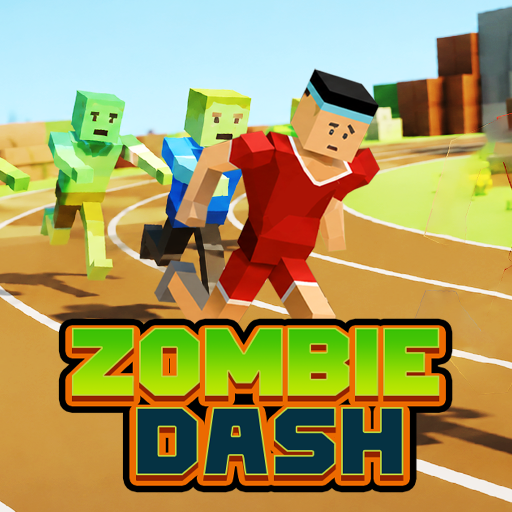
Zombie Dash is a level-based running game that places players in a desperate chase through obstacle-laden tracks while an unrelenting horde of zombies follows close behind. There is no weapon, no jump, and no time to hesitate: the only viable strategy is to sprint forward, switch lanes, and avoid every hazard before the undead catch up. The game blends the urgency of a chase with the precision of a reflex-based arcade challenge. It offers a compact but escalating series of levels, each featuring denser obstacle patterns and faster decision-making. This combination of simple controls and demanding execution makes Zombie Dash accessible to casual players and satisfying for enthusiasts who appreciate mastery through repetition and focused attention.
At its heart, the game is a pure survival test. The player character runs automatically, and the world is built around a series of hazardous paths where every obstacle must be handled through lateral movement. Because the zombie horde is always directly behind the runner, there is no room for idle thinking or second-guessing. Each level must be approached as a gauntlet that rewards preparation, spatial awareness, and the ability to remain calm under pressure. What appears to be a simple running game quickly reveals a nuanced layer of risk management, particularly when coin rewards tempt the player away from the safest route.
Available in a pick-up-and-play format, Zombie Dash fits well into short gaming sessions while still offering enough depth to hold the attention of dedicated players. The game's theme is reinforced by the constant threat of pursuit, making every lane change feel consequential. It is this marriage of accessible mechanics and escalating challenge that gives Zombie Dash its lasting appeal. For gamers who enjoy testing their reflexes and their decision-making under duress, this title provides a focused, no-nonsense challenge that is easy to understand but difficult to master.
Do not look behind you. The zombies are always there, and watching them only distracts from the real threats ahead. Keep your eyes fixed on the path and scan for obstacles as early as possible. Your attention is your most valuable resource in this game.
Do not pursue coins at the expense of safety. Coins are useful, but a crash costs much more than the value of any coin. Only collect them when they are clearly in a safe lane or when you have enough time to return to a safe position. Treat coins as a secondary objective, never as the reason for a risky maneuver.
Learn obstacle patterns. Many levels reuse sequences of hazards. If a particular section keeps ending your run, memorise its layout and plan the moves required to pass it. Each failure is information. Use successive attempts to refine your route and improve your timing.
Make controlled lane changes. Avoid constant, unnecessary shifting between lanes. Decide on a safe lane, move into it deliberately, and hold your position until the next obstacle pattern requires a change. Smooth and economical movement is faster and safer than frantic dodging. Overcorrecting can be just as dangerous as reacting too late.
Manage coins carefully. Save your coins for revives that actually matter, such as a near-completion attempt on a difficult level. Spending them too liberally on early mistakes can leave you without the resources needed later. The revive option is most valuable when you are close to the finish line.
Remember that jumping is impossible. Do not instinctively attempt to leap over obstacles. All avoidance must be performed through lane changes, so adapt your mindset and plan accordingly. This key distinction separates Zombie Dash from many other running games and requires a different kind of spatial thinking.
Stay patient. As levels progress, reaction windows become tighter and patterns more complex. If frustration sets in, take a short break. A calm and focused mind performs far better than one driven by haste. With consistent practice and disciplined movement, every level in Zombie Dash can be conquered. The game is designed to push players to their limits, but those limits can be expanded with deliberate effort and a steady hand.
A: Zombie Dash is a level-based zombie-themed running game where your goal is to run fast, dodge obstacles, and escape zombies chasing you.
A: The main goal is to dash forward through each level, avoid obstacles and traps, and reach the finish line before zombies capture your character.
A: Your runner automatically moves forward and cannot jump, so you must switch lanes to avoid obstacles.
A: Hitting rocks, trunks, or other hazards causes a crash. Zombies immediately catch up, and your run ends.
A: The path includes obstacles such as rocks, trunks, and other hazards.
A: Yes, zombies are always right behind you, while the path ahead is filled with obstacles and traps.
A: Coins are scattered along the path. You can use them to revive your run after a crash and unlock further features in the game.
A: No. Coins should not be your top priority; focusing too much on collecting them can lead to failure quickly.
A: Zombie Dash is level-based, and levels become increasingly difficult with more complex obstacle patterns.
A: Precision, fast reflexes, focus, and patience are essential skills to help you progress further.
A: Yes, you can retry a level. If needed, you can revive your run using coins.
A: The game drops you into survival challenges that get tougher over time, with zombies chasing you and obstacles ahead.
A: Your only weapon is your ability to run fast while dodging obstacles and dangers.
A: The source categorizes Zombie Dash under Casual Games and Sports Games.
The runner moves forward automatically, and players cannot influence speed or jump. Instead, control is expressed entirely through lane changes. To avoid obstacles such as rocks, tree trunks, and other hazards, the player must move the runner sideways into a clear lane. Contact with any obstacle causes a crash, upon which the zombie horde immediately catches up and ends the run. Therefore, the most important task is to read the track ahead, plan safe lanes in advance, and execute lane changes with clean, deliberate timing. Later levels may introduce faster rhythms and more intricate arrangements, but the fundamental interaction remains the same: assess, move, and survive.
Coins appear throughout the path and serve as the game's main resource. They can be used to revive the character after a crash, which effectively grants another chance to complete the level, and to unlock additional features. However, coins are not meant to be greedily collected. The riskiest part of any run is when players swerve out of a safe lane to chase a coin, because that often leads directly into an obstacle. A successful player remains mindful that survival is always more important than reward. If a coin is positioned in a lane that is already safe, taking it is fine; if it lies in the path of an approaching obstacle, it should be ignored.
The game progresses through levels that become increasingly difficult. Early levels allow players to become familiar with the lane-switching mechanic, while later levels demand quick reflexes, better anticipation, and more complex route planning. When a level is failed, the player may retry and, if available, use coins to revive and continue. Patience and repetition are part of the intended design. Each attempt reveals more about the level's layout and helps build the muscle memory required to survive. Players should treat each failure not as a setback but as a lesson. Over time, the spacing of obstacles, the timing of hazards, and the best paths through each section will become second nature.