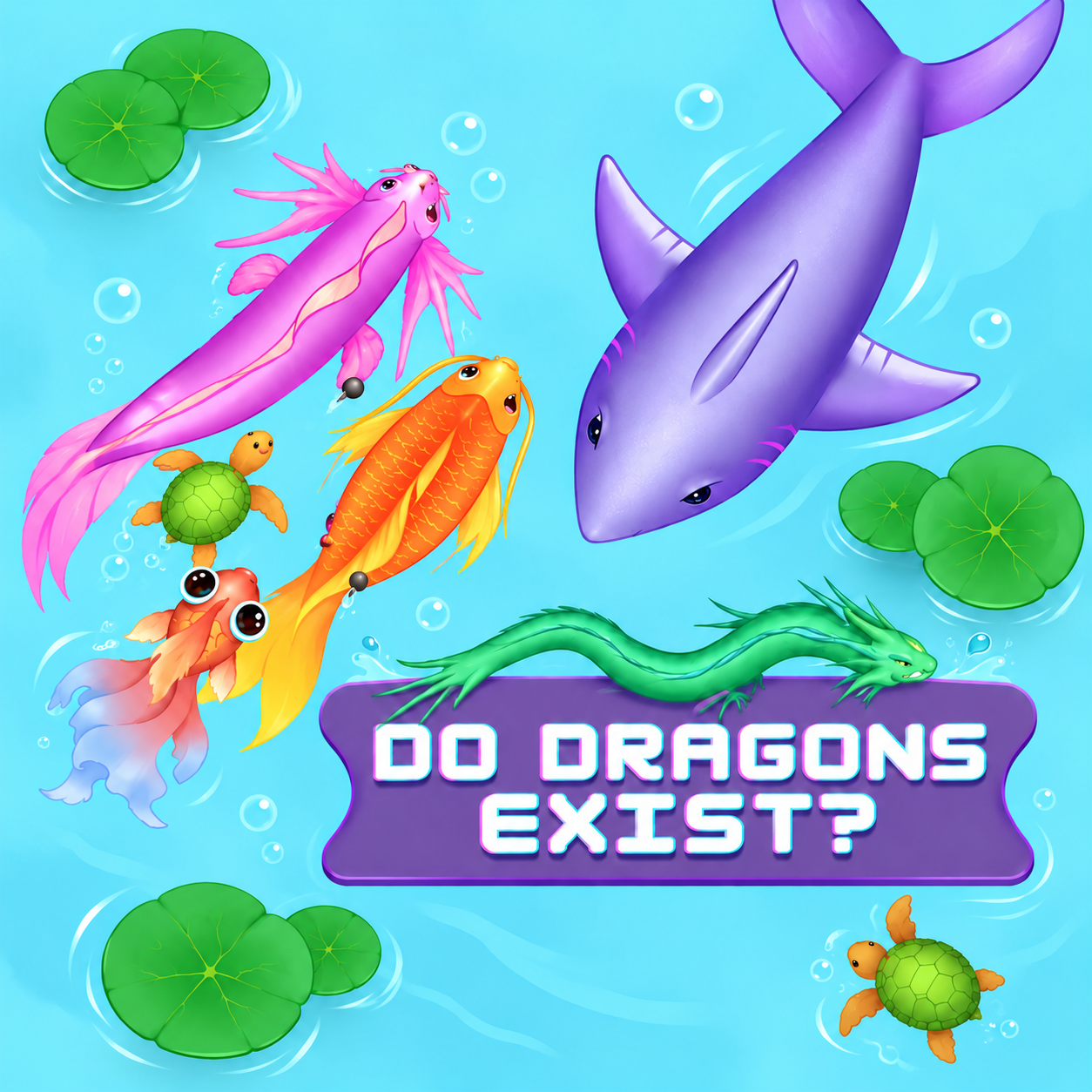
Do Dragons Exist
New Recommended Games


























Do Dragons Exist is an animal evolution game developed by HolaStudio that places players in an aquatic world where survival and adaptation are intertwined. Starting as a small tadpole, players must navigate a food chain in which every creature is both potential prey and potential predator. The central objective is to evolve through the ranks by collecting animals, merging identical creatures, and eventually producing a powerful dragon. The game combines real-time movement, risk assessment, and incremental progression. It is not a fast-paced action game but a strategic survival experience where patience and observation matter. The premise is simple: eat or be eaten, but the execution requires careful decision-making. The game's appeal lies in its accessible mechanics and the satisfying sense of growth from a vulnerable tadpole to an apex predator. It is designed for players who enjoy animal-themed evolution games and want a straightforward yet engaging challenge.
The game offers several notable features that distinguish it within the animal evolution genre.
First, the evolution system is straightforward but rewarding. The rule that three identical creatures merge into a stronger species is easy to understand, yet it creates meaningful strategic depth. Players must track which animals they already have and which ones they need. This encourages focused play and gives every encounter purpose.
Second, the predator-prey hierarchy is dynamic. The game world is not static. As the player's pack evolves, the balance of power changes. Early threats become prey, while new dangers emerge. This constant shift keeps the gameplay fresh and forces players to adapt. The sense of progression is tangible: what was once a terrifying predator can later become a meal.
Third, the pack management system adds a layer of risk. Because the game continues until the entire pack is eaten, individual losses are not immediately fatal. This allows for strategic sacrifice. Players can use smaller companions as buffers while protecting more valuable creatures. However, overusing this tactic can stall evolution. This creates a tension between short-term survival and long-term growth.
Fourth, the controls are simple and accessible. The drag-to-move mechanic works well on both desktop and mobile devices. The lack of complex button combinations makes the game easy to pick up, but the strategic decisions keep it engaging. This accessibility is a key strength, as it allows players to focus on the evolution process rather than struggling with controls.
Fifth, the game's visual and thematic presentation is clean and focused. The aquatic setting is appropriate for the starting point of a tadpole, and the progression to a dragon feels natural within the game's logic. The animal designs are clear enough that players can quickly identify different species and their relative threat levels.
Finally, the game offers a satisfying loop: explore, collect, merge, survive, and evolve. Each run provides a new opportunity to refine strategy. The combination of real-time movement and incremental progression creates a compelling experience for players who enjoy growth-based gameplay.
To succeed in Do Dragons Exist, players should adopt a strategic mindset rather than simply chasing every animal in sight.
First, prioritize matching. The fastest way to evolve is to complete groups of three identical creatures. Random collection may temporarily increase the pack's size, but it does not contribute to evolution. Before moving toward a target, check whether it matches any current pack members. If it does not, consider whether the risk is worth taking.
Second, avoid unnecessary risks. Larger predators can eat pack members, and losing animals slows progress. It is often better to let a dangerous target go than to lose a valuable creature. Patience is a virtue in this game. Wait for safe opportunities and strike only when the odds are favorable.
Third, maintain escape space. Keep enough distance from predators to allow for a quick retreat. If the pack becomes surrounded, the chances of losing multiple animals increase dramatically. Always be aware of the nearest escape route. Moving constantly can help avoid being cornered.
Fourth, protect near-complete pairs. If a pair of identical creatures is one match away from merging, treat them as high-value assets. Do not risk them in dangerous encounters. Their survival is essential for evolution. Sacrificing a pair for a small gain is rarely worth it.
Fifth, use smaller companions wisely. Since the game ends only when the entire pack is eaten, smaller animals can act as buffers. They may be eaten first, giving the player time to escape with more valuable creatures. However, relying too heavily on sacrifices will deplete the pack and slow evolution. Use this tactic sparingly.
Sixth, understand the food chain. As the pack evolves, the threat level of other animals changes. Reassess the environment after each evolution. An animal that was once a predator may now be prey. Conversely, new, larger predators may appear. Stay alert and update your mental map of safe and dangerous zones.
Seventh, master the controls. The drag-to-move mechanic is simple, but smooth and precise movement is important. Avoid erratic movements that can lead the pack into danger. Practice guiding the pack with controlled, deliberate motions. On touchscreens, be careful not to obscure the action with your finger.
Eighth, do not chase every nearby creature. The game rewards selective targeting. Chasing a target into a dangerous area can result in losses that outweigh the benefit. If a target is too risky, move on. There will always be other opportunities.
Ninth, keep moving. A stationary pack is an easy target. Constant movement not only helps avoid predators but also allows the player to scan the environment for matching creatures. Use movement as a tool for both survival and discovery.
Tenth, be patient. Evolution takes time. Do not expect to become a dragon immediately. Focus on incremental progress and learn from each run. The game is as much about strategy as it is about reaction. With careful planning and disciplined play, the path from tadpole to dragon becomes achievable.
In conclusion, Do Dragons Exist is a well-designed evolution game that rewards strategic thinking and careful risk management. By understanding the merge system, respecting the predator hierarchy, and managing the pack wisely, players can guide their creatures from humble beginnings to legendary status. The game is accessible to newcomers but offers enough depth to engage experienced players. Approach each run with patience, and the dragon will eventually be within reach.
A: Do Dragons Exist is an animal evolution game developed by HolaStudio.
A: You begin as a small tadpole and must survive long enough to climb the food chain.
A: The goal is to keep evolving until your pack produces a powerful dragon.
A: When your pack contains three creatures of the same type, they automatically merge into a larger and stronger species.
A: Completing matching groups is the fastest way to evolve. Gathering random animals may increase the size of your pack, but it does not evolve you as quickly.
A: Bigger animals can eat members of your pack, so you should keep moving, maintain enough space to escape, and protect pairs that need only one more match.
A: No. The run continues until your entire pack has been eaten.
A: Yes, smaller companions can provide temporary protection, but sacrificing too many will slow your evolution.
A: Yes. As your creatures become stronger, animals that were once dangerous can become possible targets.
A: Click and hold, then drag to change direction.
A: Press and drag to guide the pack.
A: You explore the water and collect animals that are safe to approach.
The gameplay revolves around controlling a pack of creatures in a watery environment. At the start, the player controls a single tadpole. As the game progresses, the pack grows and evolves. The primary action is movement: players guide the pack toward animals that are safe to approach and away from larger predators. The controls are minimal. With a mouse, click and hold, then drag to change direction. On a touchscreen, press and drag to guide the pack. This simple control scheme allows players to focus on strategy rather than complex inputs.
The core mechanic is collection and merging. When the pack contains three creatures of the same type, they automatically merge into a larger and stronger species. This is the only way to evolve. Therefore, players must identify animals that match the current members of their pack. Gathering random animals may increase the size of the pack, but completing matching groups is the fastest way to evolve. The game encourages deliberate targeting rather than indiscriminate consumption. As the pack evolves, the hierarchy shifts. Animals that were once dangerous can become possible targets, and new, larger predators appear. This creates a dynamic environment where the player must constantly reassess threats and opportunities.
Survival is not solely about evolution. Bigger animals can eat members of the pack, so chasing every nearby creature is risky. Players must keep moving, maintain enough space to escape, and protect pairs that need only one more match. Losing one animal does not end the game. The run continues until the entire pack has been eaten. This means that smaller companions can serve as temporary protection or sacrifices, but losing too many will slow evolution. The game thus balances aggression with caution. Players must decide when to pursue a target and when to retreat.