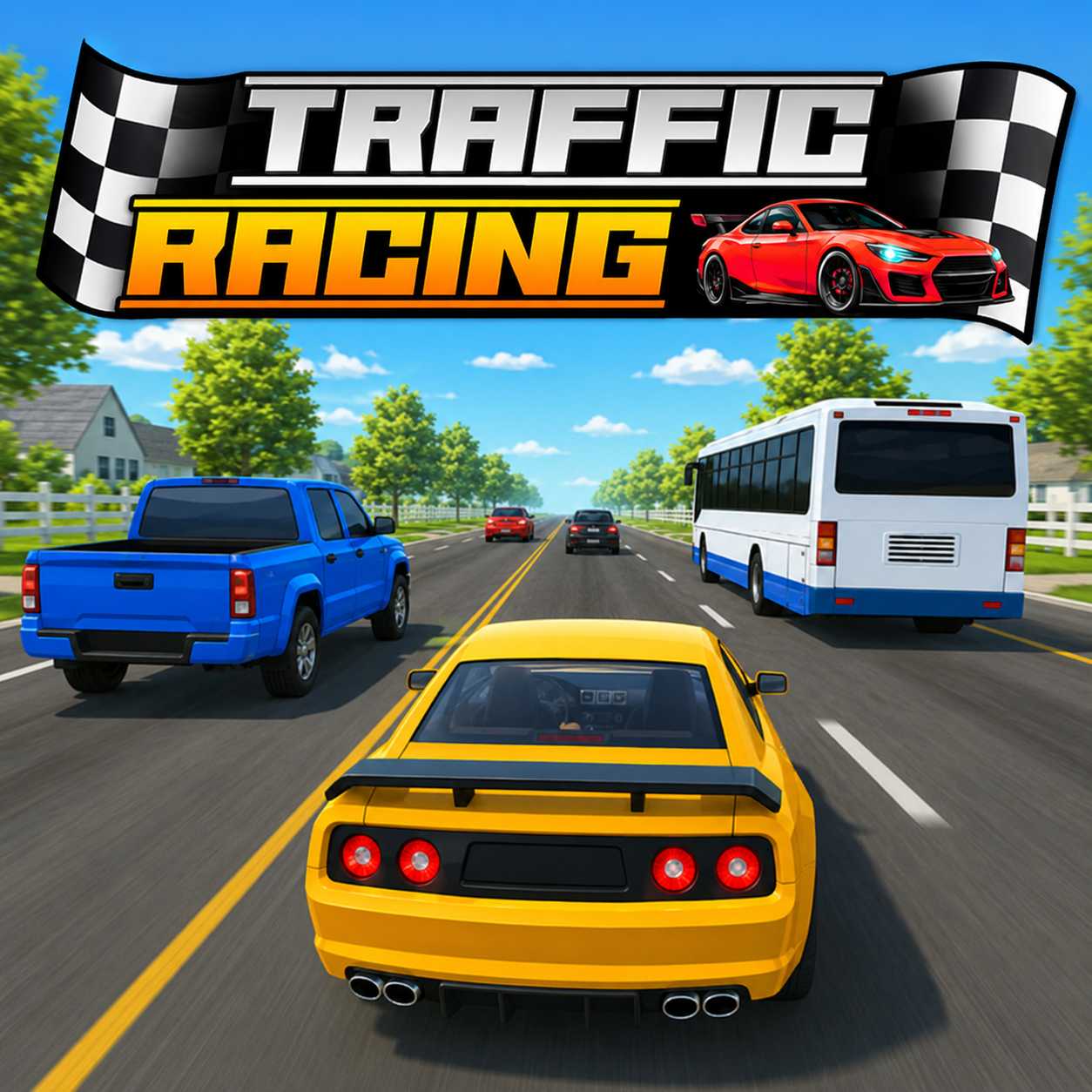
Traffic Racing
New Recommended Games

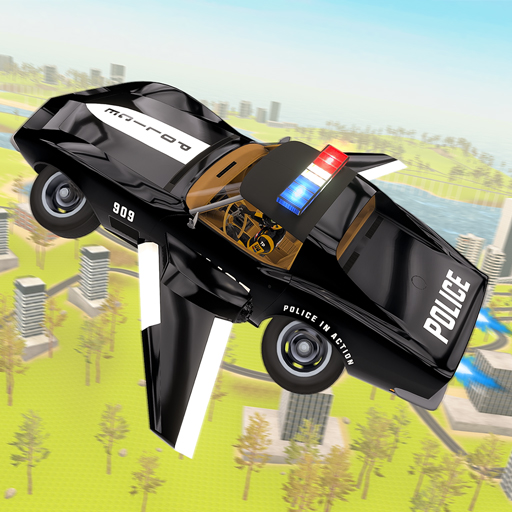






Traffic Racing is a 3D arcade driving experience that puts users in the driver’s seat of a powerful sports vehicle on crowded urban freeways with multiple lanes. The central gameplay revolves around velocity, calculated overtaking, and exact maneuvering through dense and ever-changing traffic. Using a third-person camera, the player must navigate long stretches of straight road, moderate curves, underground passages, and highways filled with civilian cars traveling at different speeds. This title is not merely about pressing the accelerator and holding it; it requires ongoing awareness of the surroundings, anticipation of future obstacles, and disciplined control of the steering wheel. Each attempt challenges the player to scan the road ahead, choose the most secure open lane, and carry out movements without sudden corrections that might result in a crash with another vehicle or a guardrail.
The game includes a well-defined advancement system in its Career Mode, alongside a competitive online component known as Racing League Online. These two modes rely on the same core driving mechanics but introduce different kinds of tension and goals. In Career Mode, players advance through a sequence of numbered objectives that include specific distance and time requirements, whereas the online league matches you against a real opponent on a road full of traffic. In between races, the garage allows players to buy new cars, apply custom paint finishes, and improve essential performance characteristics. By combining solo skill development, head-to-head racing, and vehicle progression, Traffic Racing appeals to fans of fast-paced arcade driving who also appreciate a meaningful strategic layer.
Traffic Racing delivers a comprehensive set of gameplay systems that keep the action engaging in both single-player and competitive settings.
To succeed in Traffic Racing, quick reflexes alone are not enough. Thoughtful driving and careful vehicle management are equally essential.
First, always scan the road ahead and decide on your route before you approach a dense group of cars. Spot an open lane early, change lanes smoothly, and align your vehicle before reaching the next cluster. Abrupt, sharp steering at high speed is a frequent cause of accidents, especially on narrow stretches or close to barriers.
Second, avoid forcing every opening. The combo multiplier encourages aggressive passing, but trying to fit through a space that is too tight will often lead to a crash. It is wiser to apply the brakes briefly and wait for a safer opportunity than to jeopardize your entire run for a few additional points. Learn to distinguish between gaps that are truly open and those that are deceptive.
Third, allocate your upgrades carefully. A common error is spending every coin on Top Speed, yet acceleration and braking are equally vital, particularly in missions with heavy traffic. Acceleration helps you regain momentum after slowing down, while braking provides the control needed to react to sudden obstacles. Evaluate your performance after each mission and improve the attribute that is holding you back. If you frequently crash because you cannot stop in time, put resources into Braking. If you have trouble rebuilding speed after slow sections, concentrate on Acceleration.
Fourth, in Racing League Online, do not become obsessed with your rival. The other driver is not a reliable guide; they may take chances that you should not copy. Instead, rely on your own judgment to pick the safest and quickest route through traffic. Defeating your opponent matters, but staying on the road is the foundation of any victory.
Finally, use Career Mode as a training ground before entering competitive play. The mission-based setup allows you to study how traffic behaves, refine your passing technique, and grasp the importance of choosing the right lane. Pay close attention to the results screen after every mission; it is a valuable resource for identifying weaknesses. With patience and regular practice, you can master the highway and become a strong competitor in both Career Mode and the Racing League Online.
A: Traffic Racing is an arcade-style 3D driving experience centered on velocity, disciplined passing, and exact maneuvering amid congested thoroughfares. From a third-person camera angle, you navigate multi-lane urban expressways populated by everyday vehicles.
A: Achieving success requires more than simply keeping the throttle down. You need to anticipate the route ahead, select a clear lane, and steer clear of abrupt inputs that could push your car into nearby traffic or a guardrail.
A: The courses include extended straightaways, mild curves, underground tunnels, and vehicles distributed over multiple lanes.
A: Passing other cars rewards you with points and coins. Drifting contributes to your total as well, and a series of cleanly executed moves raises the combo multiplier.
A: A bold driving style can yield stronger outcomes, yet squeezing through a tight opening may cost precious seconds or end your attempt entirely. The real skill lies in judging when to attack and when to safeguard your current spot.
A: Traffic Racing offers two distinct play modes: Career Mode and Racing League Online. Both rely on identical handling fundamentals, but each introduces its own goals and sources of tension.
A: Career Mode consists of a sequence of numbered objectives. Before a mission starts, you are shown the time of day, the required distance, and the allotted time. More advanced stages may add extra stipulations tied to passing maneuvers, the oncoming lane, or an interior camera perspective.
A: Upon finishing a mission, the summary screen displays your overtake count, drift points, total distance covered, best distance achieved, coins collected, and advancement within your current level. Reviewing these stats helps you determine whether the next attempt calls for smoother handling, greater velocity, or an upgraded vehicle.
A: In Racing League Online, you are paired against another player on a roadway crowded with civilian cars. Prior to the race, you may select a country flag and inspect your history, including victories, defeats, consecutive win streaks, and cup totals.
A: Your standing in the league is governed by points, which decide whether you climb toward a higher tier, remain in your present rank, or drop down to a lower division.
A: While outpacing your rival is the primary objective, the surrounding traffic never stops being a danger. Tailgating the other vehicle without thought may steer you straight into a congested lane, so plotting your own secure path is frequently the smarter tactic.
A: The garage houses a variety of vehicles sorted into different classes. Coins you collect can be spent on buying new cars or enhancing their performance characteristics. In addition, you are free to choose from several exterior paint finishes.
A: Three performance areas are available for upgrades:
A: Focus your upgrades on the attribute that is holding you back instead of pouring all your coins into top speed. When missions pack more cars into your route, acceleration and braking grow significantly more valuable.
A: Use WASD or the Arrow Keys to accelerate, brake, and steer your vehicle.
The input method is simple to grasp: you can utilize the WASD keys or the Arrow Keys to speed up, slow down, and turn. However, the real difficulty is not in how you control the vehicle, but in your ability to interpret the flow of surrounding vehicles and choose the optimal positioning on the road. The highway consists of several lanes, and the distribution of cars is far from uniform. Certain automobiles travel at higher speeds, while groups of slower vehicles can unexpectedly form, particularly in the vicinity of curves and the approaches to tunnels. To achieve success, you need to continuously survey the road ahead and select a lane well in advance. Reacting at the very last second is dangerous; a gradual, early lane change is nearly always a more secure option than a frantic last-instant swerve.
In Traffic Racing, overtaking serves as the primary mechanic. Passing other cars rewards you with points and coins, and executing drifts contributes extra to your overall score. When you chain together several successful maneuvers in a row, a combo multiplier activates, which can greatly boost your total earnings during an extended session. Nevertheless, driving aggressively carries inherent risks. Squeezing your car through a tight space between two other vehicles might look spectacular, but it frequently results in a crash that either wastes precious time or terminates your run altogether. The essential skill lies in determining the right moments to press forward with aggression and the right moments to safeguard your current position by releasing the accelerator and waiting for a more favorable opportunity.
Career Mode is organized around a series of numbered objectives. Prior to each race, the game presents the time of day, a required distance to cover, and a specific time constraint. As you advance, later objectives add extra requirements, such as achieving a certain number of overtakes, utilizing the oncoming traffic lane, or completing the race from the cockpit perspective. These diverse conditions compel you to modify your driving approach instead of depending on a single fixed strategy. Once a mission is finished, the results screen offers a comprehensive summary of your performance, covering overtakes, drift points, total distance traveled, best distance achieved, coins collected, and progress toward the next level. This detailed feedback proves vital for determining whether you need to refine your driving precision, increase your speed, or acquire a more capable vehicle for the upcoming challenge.
Racing League Online pits you against a single rival on the same congested roadway. Before the race begins, you have the option to select a national flag and examine your statistics, which include victories, defeats, current winning streaks, and championship trophies. Your league standing is determined by points, which decide whether you advance toward a higher tier, maintain your existing rank, or drop down a level. Although defeating your opponent is the main goal, the surrounding traffic remains a persistent hazard. A frequent error is to tail the other car without thinking; the rival might have picked a trajectory that leads straight into a congested lane. Instead, you ought to concentrate on your own route, treating the opponent merely as a point of reference while always making autonomous choices based on the conditions of the road ahead.