Tag Run
New Recommended Games








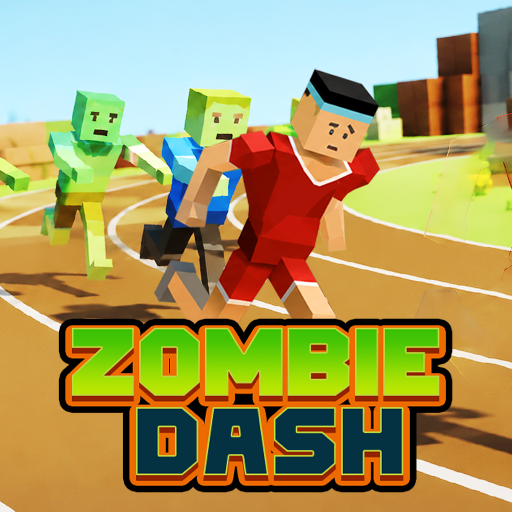

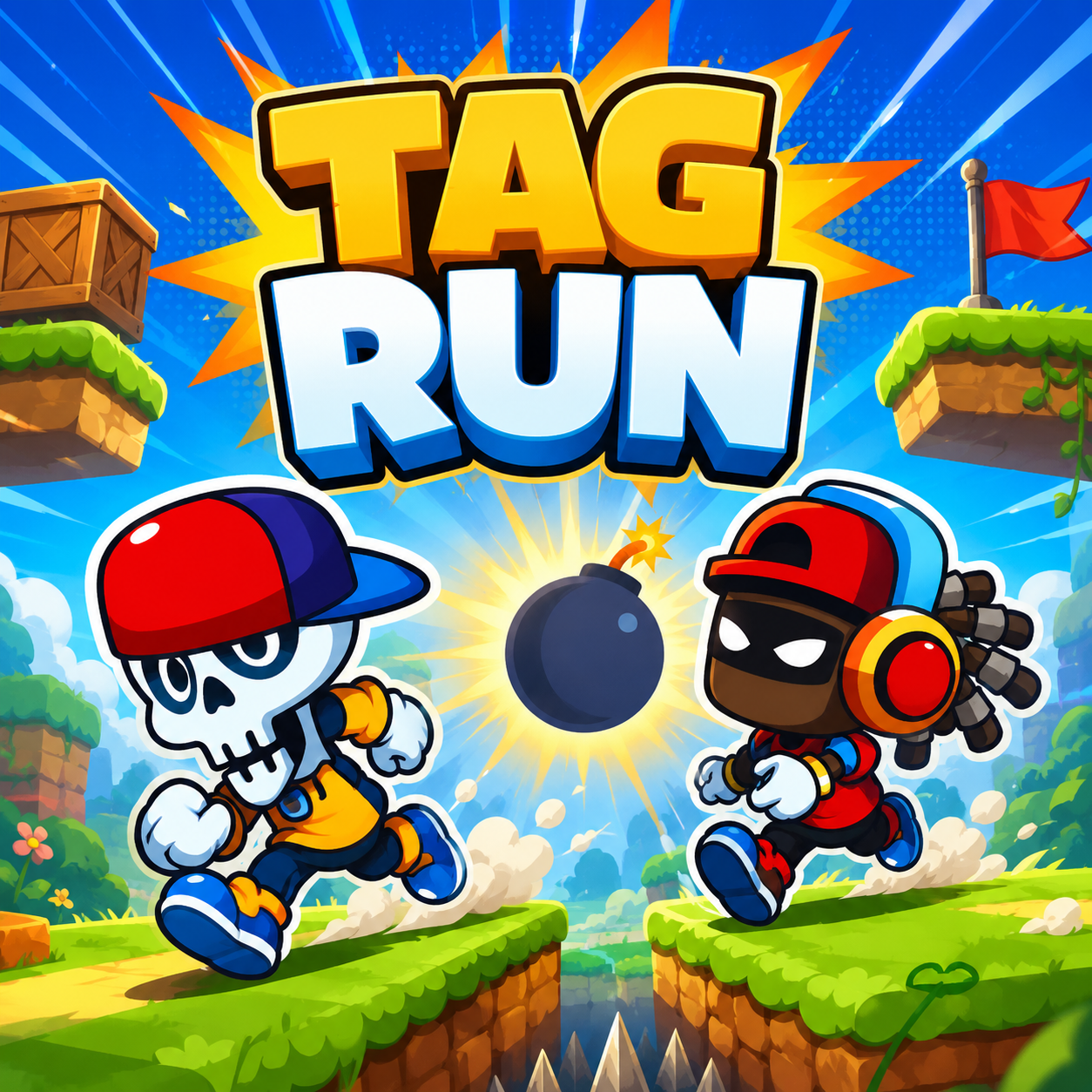
Tag Run is a swift multiplayer freerunning competition that reinterprets the traditional schoolyard activity of tag as a high-risk endurance contest. Developed with an emphasis on frantic, split-second choices, the game places six participants into a selection of colorful and hazardous arenas. At the beginning of every match, one competitor receives a ticking explosive. The fundamental goal is straightforward: avoid being the individual holding the explosives when the countdown reaches zero. The device can be passed by physically touching another player, generating a continuous chain of tension that fuels each round. The participant who survives all detonations—by never possessing the explosive at the crucial instant—claims the round. The game accommodates both solo play against computer-controlled adversaries and local multiplayer for up to four participants, making it appropriate for individual practice or social contests. By merging classic tag rules, parkour mobility, and unpredictable enhancement items, Tag Run provides an adrenaline-charged encounter that rewards fast reflexes, spatial orientation, and tactical reasoning.
Six Unique Arenas with Distinct Dangers and Designs
Tag Run offers six manually crafted maps, each created to promote a different strategy.
Fifteen Obtainable Avatars
Achieving victories grants in-game currency used to unlock up to 15 playable characters. Although all avatars share identical movement and collision properties, each features unique animations and visual designs. This allows individuals to showcase personality without impacting gameplay balance, making unlocks cosmetic incentives that enhance engagement.
Variable Boost Items
Two primary boost items appear throughout the arenas: relocation pads and leap mechanisms. Relocation pads can instantly shift a player’s position, enabling a sudden getaway from a chaser or allowing a bomb holder to materialize unexpectedly behind a foe. Leap mechanisms provide vertical elevation, useful for reaching high platforms, dodging ground-level hazards, or startling a player who felt secure. Deciding when to activate these tools often determines who lasts the final moments of a round.
Versatile Multiplayer Options
Tag Run supports both single-player mode against computer adversaries (up to five AI opponents) and local multiplayer for two to four individuals on a single device. The AI opponents are competent, offering a solid challenge for solo training, but the genuine intensity arises from human rivals who can anticipate and counter your tactics.
Develop Predictive Skills
A frequent error is chasing the explosive holder relentlessly. Instead, focus on forecasting where opponents will move. Intercept their path by heading to a bottleneck or positioning near a relocation pad. If you hold the explosive, avoid panic—take a moment to evaluate the locations of nearby players and select the safest tag opportunity.
Utilize Relocation Pads Both Defensively and Offensively
Relocation pads are not solely for escape. If you observe an opponent sprinting toward a pad, you can dash to a different pad and intercept them at the destination. Conversely, if you are the explosive carrier, stepping onto a pad that leads to a remote area may purchase time, but only if you can quickly touch someone before the timer expires. Memorize pad positions in each map to facilitate instant decisions.
Absorb the Distinct Rhythm of Each Arena
The slippery floors of Winter require gentler turns and earlier deceleration. Lava map demands precise jump timing to avoid falling—rushing often results in accidental eliminations. In Jungle, use the vines to create unpredictable motion. A participant who knows a map’s peculiarities can exploit them to escape explosive holders unfamiliar with the terrain.
Monitor the Explosive Timer Continuously
Even when you are not carrying the explosive, you must mentally estimate roughly how much time remains. A clever tactic is to stay near another player as the timer is about to expire, so if the explosive carrier arrives, you can touch them back immediately. However, avoid becoming the sole accessible target.
Train with AI Before Competing Against Friends
The AI adversaries exhibit reasonable intellect, making them excellent practice partners. Play several rounds on each map to internalize the layout, boost item locations, and optimal movement routes. This preparation will pay off when you face real opponents also trying to survive.
Watch for Temporary Alliances in Multiplayer
In local multiplayer, players often form fleeting collaborations to focus on a common threat. However, these alliances collapse quickly when the explosive reaches one of the allies. Stay alert to shifting social dynamics—trust no one, and always have an escape route prepared.
Characters Are Cosmetic—Prioritize Ability
Do not be distracted by immediately unlocking every avatar. Since all characters have identical capabilities, investing time in perfecting your movement and tactical awareness is far more valuable than any appearance. Unlock characters as a reward for improvement, not as a shortcut to victory.
A: Tag Run is an energetic multiplayer parkour game that turns the traditional game of tag into an exhilarating survival contest.
A: Each match brings together six contenders within a vibrant arena.
A: Your main goal is to ensure that another player is in possession of the bomb when the countdown ends, allowing you to survive and emerge as the final competitor remaining.
A: One competitor begins with an active bomb, and the timer starts immediately. When you receive the bomb, you must swiftly tag another participant before the time expires.
A: Power-ups consist of teleport pads (which instantly move you to another location on the map) and jump springs (which propel you over barriers or onto elevated platforms).
A: Tag Run includes six unique arenas: Pixel, Winter, Lava, Jungle, Candy, and Night.
A: Yes, by winning matches, you accumulate in-game currency that can be spent to unlock as many as 15 different characters.
A: All characters share identical abilities, though each one has unique animations and visual designs.
A: Player 1 is controlled using W, A, S, D or Arrow Keys (in single-player mode).
A: Player 2 is controlled using Arrow Keys.
A: Player 3 is controlled using T, F, H.
A: Player 4 is controlled using I, J, L.
A: Outlast each explosion until you are the sole competitor still present.
A: Yes, you can play by yourself against AI opponents.
A: Up to four local players can compete together.
A: The Winter arena introduces slippery floors that make movement less consistent.
A: The Lava arena punishes reckless jumps with hazardous molten zones.
A: Press the "Report a bug" button and choose the problem you encountered (for instance, game not loading, not working, lost progress, inappropriate content, in-game purchase issue, suggestion, or other).
Each round of Tag Run begins with all six participants positioned throughout a unique arena. One player initially holds the bomb, and a visible on-screen timer appears right away. The bomb carrier must touch another player before the timer reaches zero; otherwise, the bomb detonates, removing the current holder from the game. The bomb changes hands upon bodily contact—merely colliding with another player transfers the bomb to them, and a fresh countdown begins. The objective is to survive every explosion until only one contestant remains.
Movement serves as the cornerstone of success. Players can sprint, leap, and slide through the environment using standard platforming controls. The game also includes specialized movement enhancements: teleport pads instantly move a player to a different location on the map, while jump springs propel players high into the air, enabling them to bypass obstacles or land on elevated surfaces. Using these tools effectively is essential for both evading chasers and surprising opponents with an unexpected bomb handoff.
Because the bomb changes hands frequently, players must constantly assess their distance from others and the remaining time on the bomb’s timer. Chasing an opponent recklessly often results in missing the transfer window or being caught in the explosion. Instead, skilled players predict where opponents will move and cut off their escape routes. Positioning is just as important as speed—standing near a teleport pad when the bomb is about to expire can be a life-saving strategy, or a trap if another player arrives at the same moment.
The game offers multiple control setups depending on the number of local players. Player 1 controls using either W, A, S, D or the arrow keys in single-player mode. For local multiplayer, Player 2 uses the arrow keys, Player 3 uses T, F, H, and Player 4 uses I, J, L. The controls are simple enough to learn quickly, but the true challenge lies in mastering movement under pressure.