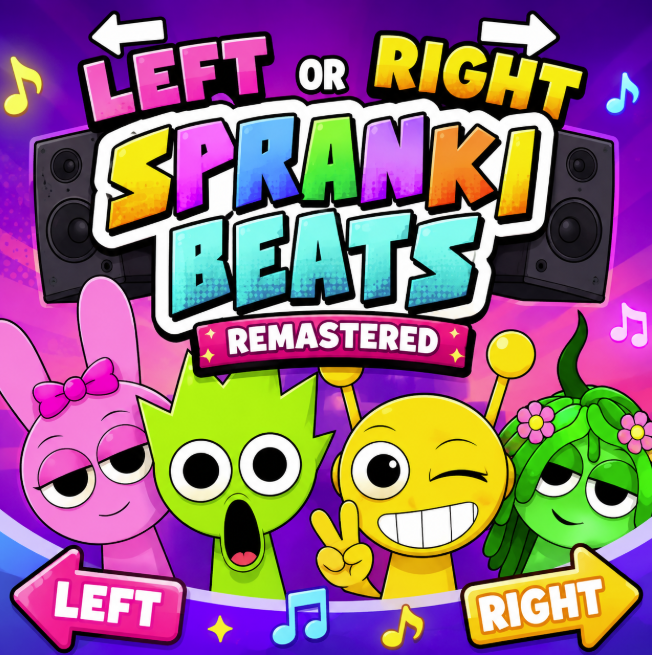
Sol veya Sağ Spranki Beats
Yeni Önerilen Oyunlar


















Left or Right: Spranki Beats is an inventive rhythm game that distills the genre to its purest essence: a binary choice between two directions, synchronized with a musical pulse. Unlike conventional titles that demand complex button combinations, scrolling note highways, or dense visual feedback, this game strips the experience down to a single, elegant question—will your next move be left or right? The result is an engaging hybrid of reflex testing, pattern recognition, and auditory perception, delivering the thrill of a rhythm action game without entangled controls or overloaded interfaces.
The premise is simple: as music plays, the game issues prompts indicating which side of the screen to select. In its most basic form, the player must choose the correct side to match the cue. Timed with the accompanying track, each attempt maintains rhythmic consistency and builds a sensorial link between what you hear and what you do. The design ethos is accessibility—anyone can pick it up and understand the core loop within seconds—but the escalating speed and dynamic patterns ensure that seasoned players are not left with a shallow experience. Each track contains its own embedded rhythm signature, requiring the player to internalize the beat and predict the next prompt. The later tracks and advanced modes demand superior reactions, rhythmic intuition, and the ability to remain composed under tempo pressure. With a clear, intuitive user interface, visually unambiguous signals, and a compulsion loop that roars within minutes, Left or Right: Spranki Beats is a title that respects both newcomers and hardcore leaners within the niche, becoming an instant recommendation to rhythm game enthusiasts looking for a fresh twist on reflex-based gaming.
To get the most out of Left or Right: Spranki Beats, implement the following pratiche suggestions handed down from rhythm veterans:
Left or Right: Spranki Beats is an engaging meta-rhythm game that combines stark minimalism with robust depth. It honors the core principles of rhythm gameplay—practicing timing, memorization, and anticipation, and it wraps them in a simple two-digit access. For pros, more advanced modes provide a true benchmark of their reflexes, and for new players the onset and tutorials are a welcoming introduction. The real joyhere is in that small moment when the beat and your choice align flawlessly. So pick a side, focus, and let the music guide you.
Now check if we include all sections. "Précautions/Tips" spelling? We must use exactly "Precautions/Tips". In the summary, "How to Play" etc. We'll adjust if header case.
Also, the content mentions "rythm" but we should use correct "rhythm". Our article is in English.
We need about 1000 words. Let's count our draft. It's quite long; I'm not sure exact. I'll write more concise summary perhaps to balance. Let's estimate: Summary around 250 words, How to Play ~200, Key Features ~150, Tips ~300, closing ~100? Total ~1000. Good.
Now produce Markdown with headers as required. Ensure no extra preambles.
Let's final### Summary
Left or Right: Spranki Beats is an inventive rhythm game that distills the genre to its purest essence: a binary choice between two sides, synchronized with a musical pulse. Unlike conventional rhythm titles that rely on dense note highways, complex button combinations, or scrolling sliders, this game strips away all extraneous systems and leaves only the fundamental challenge—do you choose left or right, and can you do it exactly on the beat? The result is a seamless hybrid of timing, pattern recognition, and auditory intuition that offers a refreshingly accessible entry point for newcomers while still providing a substantial test for seasoned players.
The core premise is elegantly simple: prompts appear on screen indicating a left or right position, and the player must select the corresponding side in tune with the rhythm of a given track. Each track is built around its own rhythmic structure, requiring the player to internalize temporal spacing and anticipate when the next cue will arrive. The early tracks act as a gentle tutorial, encouraging players to grasp the basic flow. As the player advances, the speed increases, the patterns become more irregular, and the greater accuracy becomes mandatory. What sets this title apart, aside from its purity, is the speed at which it escalates—within the first hour, the game transitions from a casual listen-and-tap pastime to a high-stakes test of auditory processing and micro-decision accuracy. The vibe is intuitive for novices but deeply rewarding for those wanting to measure rhythm. Ultimately, Left or Right: Spranki Beats strips away all noise and entrusts you with a core primal wonder: can you be on the beat?
When you step into the game, you are greeted by a clean interface with a minimal selection of songs. Begin with an easier track to become comfortable with the rhythm and control. The playable is incredibly straightforward: during the song, you will see cues appear that guide you to choose the left or right side. Your task is to press the corresponding button or touch the appropriate area just as the beat hits. The crucial element is not how quickly you react, but how accurately you land each selection in tempo. Instead of smashing the input as fast as possible, you must listen to the beat and "slot" your move inside the groove.
Each song uses directional sounds, visual flashes, or pan effects to inform which side to pick. The base mode combines visual arrows and musical accents. A slow, steady tempo helps teach the fundaments; later songs feature more complex offbeat patterns that will break your anticipation. To play well, you need to develop both your peripheral vision and your sense of pulse. One useful method is to mentally "silence" the visual cue and rely on the rhythmic grooves for your hints. This is especially important because the game features four distinct modes, each with a unique rule on the classic left/right selection:
Each mode has its own skill curve, and players can switch between them to train different aspects of perception. Use the early tracks as pure training; do not rush to hardest difficulty, as you need to build your internal beatmap.
Successful play is not just about how quick you click—others have to be careful about the whole rhythm experience. Here are several tips to improve performance and avoid common pitfalls:
To sum up, remember: precision over raw speed, solid hearing, spatial awareness, and clear mental maps. Left or Right : Spranki Beats is a celebration of minimal groove. The player is invited to enter a musical loop where their input becomes the beat. It's the whole what – feel of sensorial gratification and sound added. That's the summit to master: not just be able to choose, but to choose in complete humanity to tune.
C: Left Or Right Spranki Beats, ilgi çekici melodileri, hızlı refleksleri ve basit yön kararlarını harmanlayan ritim tabanlı bir oyundur. Müzik çalarken ekrandaki ipuçlarını gözlemler ve doğru anda uygun tarafı seçersiniz.
C: Temel amaç, görüntülenen ipuçlarına göre sol veya sağ tarafı seçmek ve seçiminizin müzik ritmiyle senkronize olmasını sağlamaktır.
C: Hiç de değil. Karmaşık kontrol şemaları yoktur; tek göreviniz müziği dinlemek, ipuçlarına dikkat etmek ve doğru yönü seçmektir.
C: Kesinlikle. Temel mekanikler yeni oyuncuların hızla kavrayabileceği kadar basittir ve başlangıç parçaları, oyuncuları oyunun nasıl çalıştığına alıştırmak için özel olarak tasarlanmıştır.
C: Evet, artıyor. Desenlerin temposu kademeli olarak hızlanır ve ilerleyen parçalar daha hızlı refleksler ile daha hassas bir zamanlama ve ritim duygusu gerektirir.
C: Oyun dört farklı oyun modu içerir. Hangi modu seçtiğinize bağlı olarak müzik ritimlerine yanıt vermeniz, ses ipuçlarına tepki vermeniz, görsel göstergeleri takip etmeniz veya değişen desen yapılarına uyum sağlamanız gerekebilir.
C: Her mod, temel sol/sağ seçim mekaniğine kendi varyasyonunu ekler ve deneyimi taze ve ilgi çekici tutar. Bazı modlar müzikal zamanlamayı vurgular, bazıları sese dayalı tepkilere odaklanır, bazıları görsel sinyallere dayanır ve birkaçı bu unsurları değişen desenlerle birleştirir.
C: Yeni başlayanlar daha yavaş bir parçayla başlamalı ve yaklaşan ipuçlarına odaklanmalıdır. Oyun sola işaret ettiğinde sol tarafa, sağa işaret ettiğinde sağ tarafa hareket edin. Her hareketi ritimle tam zamanında yapmayı hedefleyin.
C: Bir dizi bunaltıcı gelmeye başlarsa, zihinsel olarak geri adım atın ve tüm deseni aynı anda işlemeye çalışmak yerine bir seferde yalnızca bir ipucuyla ilgilenmeye odaklanın.
C: Hassas zamanlama, saf hızdan çok daha önemlidir. Müziğe çok dikkat edin, böylece bir sonraki yön seçiminin ne zaman görüneceğini tahmin edebilir ve buna göre tepki verebilirsiniz.
C: Bakışınızı ipuçlarının göründüğü alanın yakınında sabit tutun, gereksiz el veya vücut hareketlerini en aza indirin ve yaygın ritim kalıplarını öğrenmek ile daha içgüdüsel tepki vermek için parçaları düzenli olarak tekrar oynayın.
C: Temel desenlerde rahat hissettiğinizde, daha hızlı şarkılara ve tepki sürenizi ve ritim doğruluğunuzu zorlayan daha talepkar modlara geçerek kendinize meydan okuyun.
C: Öğrenme eğrisi hem keyifli hem de tatmin edicidir; öğrenmesi kolay basit kontroller, keşfedilecek çeşitli modlar ve sizi zorlamak için giderek zorlaşan parçalar içerir.
C: Bu oyun, geleneksel ritim oyunu formülüne yaratıcı bir dokunuşu takdir eden ve zamanlama ile karar verme becerilerini test etmekten hoşlanan ritim meraklıları için mükemmel bir uyumdur.
Sol veya Sağ Spranki Beats'i başlattığınızda, oyunculara çeşitli parçalar sunulur. Yeni başlayanlar için, temel ritmi kavramak ve ipuçlarının nasıl geliştiğini anlamak için daha basit bir parçayla başlamak önerilir. Mekanikler basittir: ipuçları belirir ve size sol veya sağ tarafı seçmeniz gerektiğini söyler. Ardından, o tarafa uygun tuşa dokunarak veya basarak yanıt verirsiniz. Zamanlama her şeydir—girdiniz, yalnızca sırayı hatırlamaya dayanmak yerine ritmin temposuyla uyumlu olmalıdır.
İlk aşama, etkileşimli bir öğretici olarak işlev görür ve kademeli olarak daha fazla ipucu sunar ve tempoyu belirler. Yeni başlayanlar, görüntü alanına odaklanmalı ve görsel sinyalin görünmesini beklemelidir. Aynı zamanda müziğe dikkat edin ve yanıtınızı ritimle senkronize etmeye çalışın. Mümkün olduğunca hızlı rastgele tıklamak puanınızı düşürür; oyun dikkatsiz düğme ezmeyi cezalandırır. Aksine, hassas zamanlama, ham hızdan daha değerlidir. Tüm modlarda, temel ilke sabit kalır—bir ipucu göründüğünde sol veya sağı seçin—ancak bu ipucunun biçimi önemli ölçüde değişebilir.
Dört Mod:
Sol veya Sağ (Klasik) – Bu temel moddur. İpuçları ok veya “SOL” ve “SAĞ” yazan metin olarak gösterilir. Müzik ve görsel gösterge aynı anda gelir ve hızlı bir bağlantı kurmanıza yardımcı olan iki eşzamanlı sinyal sağlar.
Yalnızca Ses Modu – Burada tüm doğrudan görsel ipuçları kaldırılır. Bunun yerine, belirgin bir şekilde sola veya sağa yönlendirilmiş bir ses veya belirli bir kanaldan gelen bir müzik notası gibi benzersiz bir ses sinyali dinlersiniz. Göreviniz, kaynak tarafı belirlemek ve gecikmeden yanıt vermektir. Bu mod, dinleme becerilerinizi keskinleştirir ve tepki hızınızı zorlar.
Görsel İpucu Modu – Bu mod, müzikal rehberliği kaldırır ve yalnızca görsel göstergelere dayanır, örneğin bir renk parlaması veya bir tarafta hareket eden bir nesne. Neredeyse bilinçaltı işleme gerektirir ve hız arttıkça zorluk artar.
Desen Değiştirme Modu – Bu mod, diğerlerinden öğeleri birleştirir. İşitsel ve görsel sinyaller hâlâ mevcut olabilir, ancak kritik nokta, kuralların bir parça sırasında değişebilmesidir—örneğin, aniden karşı tarafı seçmeniz gerekebilir veya sol/sağ yönü tersine çevrilebilir. Oyuncular, değişen koşullara sürekli dikkat etmelidir.
Her mod, sol veya sağı seçmenin görünür basitliğini korur, ancak her biri gereken zihinsel çaba düzeyini değiştirir. Aralarında düzenli olarak geçiş yapmak, beynin keskin ayrımlar yapması için eğitir.