Skate Dash
New Recommended Games





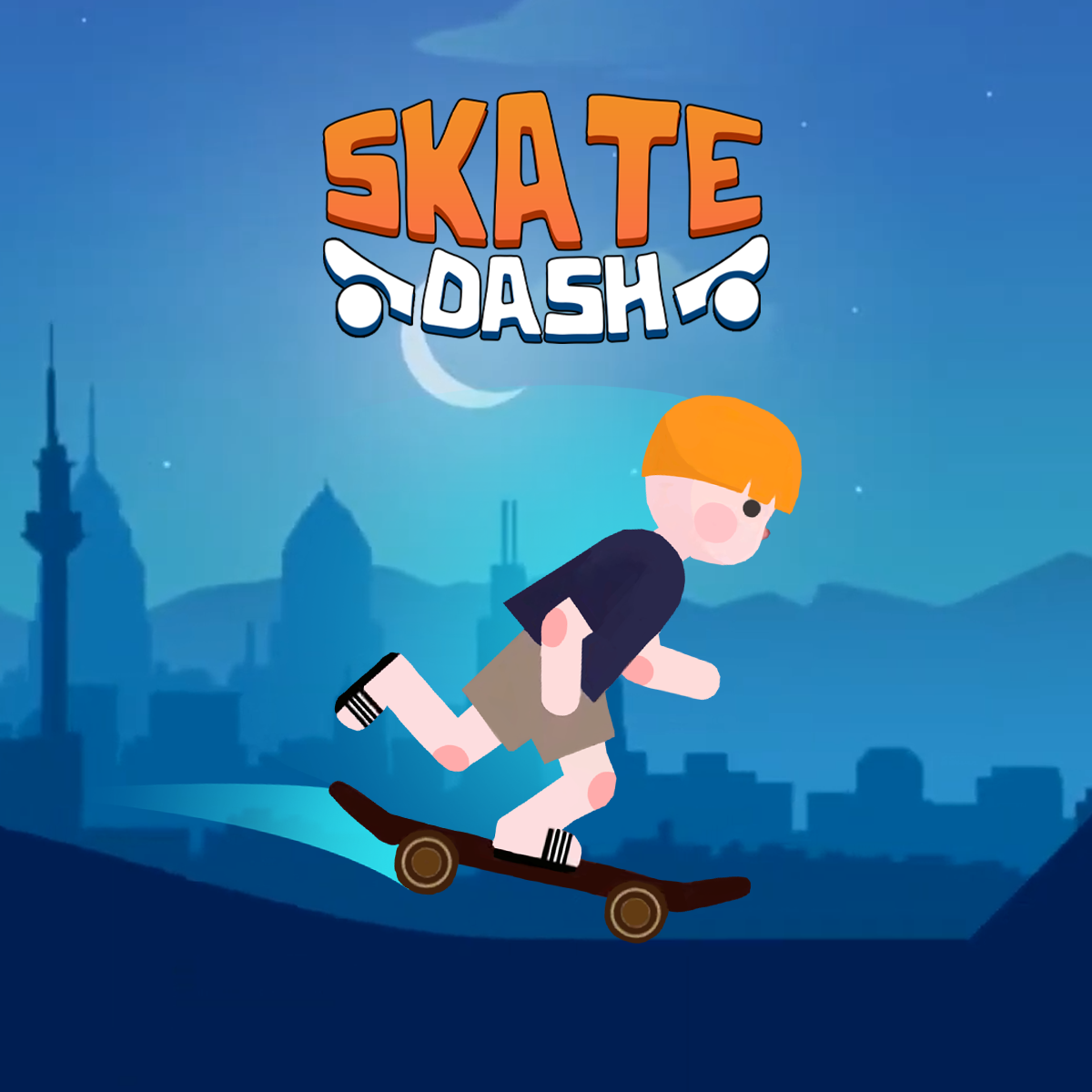
Skate Dash is a physics-based arcade game that distills the essence of skateboarding into a pure, adrenaline-fueled test of timing, control, and nerve. Set against an endless landscape of rolling hills, steep slopes, and unpredictable terrain, the game challenges players to ride as far as possible while performing daring aerial tricks and collecting coins along the way. Every run begins with a skateboard, a stretch of rugged ground, and a single goal: push your skills to the limit. The game rewards precision and risk-taking, as a single mistimed jump or over-rotation can instantly end your run. With simple one-button controls and a dynamic difficulty curve that escalates as you progress, Skate Dash offers an accessible yet deeply rewarding experience for casual players and hardcore arcade enthusiasts alike. Its physics-driven gameplay ensures that no two runs feel exactly the same, making it a compelling choice for anyone seeking quick, high-stakes action.
Physics-Based Skateboarding Gameplay: At its heart, Skate Dash relies on realistic momentum and collision physics. The skater’s speed, trajectory, and rotation all behave according to simulated physical forces, making every jump and landing feel weighty and consequential. This creates a satisfying learning curve where players must internalize the game’s physical rules to excel.
Endless Hills and Dynamically Challenging Terrain: The course is procedurally generated, ensuring infinite replayability. Each run presents a unique sequence of hills, slopes, and flat sections. The terrain’s difficulty gradually increases, introducing steeper descents, larger gaps, and tighter landings that test the player’s adaptability.
Exciting Aerial Flips and Stunt Opportunities: Performing tricks is not merely cosmetic – it is integral to scoring and progression. Flips and rotations can be chained together for higher scores, but they also increase the risk of a crash. This risk-reward dynamic adds tension and encourages players to push their limits.
Coin Collection System for Higher Scores: Coins serve as both a scoring mechanic and a subtle guide for optimal pathing. They reward players who take calculated risks and encourage exploration of different lines. High scores depend on a combination of distance traveled, tricks performed, and coins collected.
Simple One-Button Controls That Are Easy to Learn: The control scheme is deliberately minimalist – one input for acceleration on the ground and for flips in the air. This lowers the barrier to entry, allowing new players to start immediately, while still offering nuance in timing and pressure sensitivity.
Fast-Paced Action That Rewards Skill and Precision: Each run is short and intense, typically lasting from a few seconds to a few minutes. The game’s pacing keeps players engaged, and the immediate feedback of success or failure encourages repeated attempts. Mastery comes from developing a feel for the physics and making split-second decisions.
Build Speed on Downhill Slopes Before Attempting Big Jumps: Momentum is your most valuable resource. Use downhill sections to accelerate naturally, and only jump when you have enough speed to clear the upcoming obstacle. Jumping from a flat or uphill section often results in insufficient airtime and a crash.
Avoid Over-Rotating During Flips to Ensure Safe Landings: It is tempting to spin as many times as possible, but over-rotation is the leading cause of crashes. Learn to time your rotations so that the skater is upright and wheels-down just before landing. A single clean rotation is often safer and more effective than an uncontrolled multiple spin.
Focus on Maintaining Momentum Rather Than Constantly Accelerating: Holding down the accelerate button at all times can make the skater too fast to control, especially on steep descents or when approaching sharp hills. Use short bursts of acceleration to maintain optimal speed, and release to slow down when necessary. Smooth, consistent speed management leads to longer runs.
Collect Nearby Coins When It Is Safe to Do So: Coins are tempting but can distract from maintaining a safe trajectory. Only go for coins that are clearly along your current path or that require a minor adjustment. Never sacrifice a stable landing for a coin – the run-ending crash is not worth the few points.
Practice Timing Your Jumps to Clear Steep Hills Smoothly: The transition from going uphill to airborne is critical. If you jump too early, you may not clear the crest; too late, and you might clip the hill and crash. Observe the terrain ahead and anticipate the moment the skater leaves the ground. With practice, this timing becomes intuitive.
Be Patient and Embrace Failure as Part of the Learning Process: Skate Dash is designed to be challenging. Even experienced players will crash frequently. Instead of getting frustrated, view each run as a learning opportunity. Note where you lost control and adjust your approach. Consistent practice will gradually improve your distance and scores.
Use the Physics to Your Advantage: The game’s physics model means that speed and rotation are interconnected. For example, rotating faster in the air can sometimes help you tuck into a tighter landing position, but it also increases angular momentum. Experiment with different rotation speeds to find what feels stable for you.
Stay Alert to Terrain Patterns: While the course is procedurally generated, certain patterns repeat – long downhill runs, steep uphill climbs, and sudden flat sections. Recognizing these patterns a split second ahead allows you to plan your acceleration and jumps proactively rather than reactively.
By following these guidelines, players can avoid common pitfalls and steadily improve their performance in Skate Dash. The game rewards practice, patience, and a willingness to learn from every spectacular crash. Whether you are aiming for a high score or simply want to enjoy a few minutes of skateboarding mayhem, these tips will help you ride farther, smarter, and more stylishly.
A: Skate Dash is a physics-based arcade game where you play as a skateboarder, ride across endless hills, perform aerial tricks, collect coins, and push your limits.
A: Your goal is to skate as far as possible by managing your speed, adapting to changing slopes and heights, maintaining momentum, and landing safely to score higher.
A: On flat ground, click and hold to accelerate, and release to slow down. In the air, you can perform flips and rotations by using the controls.
A: Avoid over-rotating in the air and make sure the skateboard touches down smoothly so you can keep running and preserve momentum.
A: Accelerate on downhill sections to prepare for bigger jumps, avoid over-rotating, focus on maintaining momentum instead of constantly accelerating, collect nearby coins only when it is safe, and practice jump timing to clear steep slopes smoothly.
A: Physics-based skateboarding gameplay, endless hills and dynamic terrain, aerial flip tricks, a coin collection system, simple one-button controls, and fast-paced skill-based action.
A: Sports, platform, and skill game.
A: Physics, dodge, skateboarding.
A: Click the Share button to copy the link and send it to your friends.
A: Click "Report a bug" or "WHAT ISSUE DID YOU FIND IN", choose the specific issue type (such as the game not loading, the game not working, lost progress, inappropriate content, in-app purchase help, suggestions, and more), and submit it.
A: You can add a comment in the comments section, but you may need to read and accept the terms first.
A: Click the Like or Dislike button to share your opinion.
A: Click the Add button, which is usually used to add the game to the My Favorite list.
A: Yes. Click the Full Screen button to switch to full-screen mode.
A: The content mentions "I need help with an in-game purchase", which indicates that in-app purchases are available and can be supported.
A: You can use the report issue feature and choose "The game don't load" to submit feedback.
A: The page lists many other popular games below, such as MineClicker 2, Stumble Race, and Hill Climb Racing Lite.
The core mechanics of Skate Dash revolve around managing speed, momentum, and air control. Players control a skater navigating a procedurally generated endless course composed of continuous hills and valleys. The controls are intentionally minimal: on the ground, clicking and holding the mouse or touch input accelerates the skater, while releasing the input slows them down. This binary acceleration system forces players to carefully modulate their speed – especially on downhill sections where building momentum is key, and on uphill climbs where maintaining enough pace to crest the next slope is critical.
Aerial gameplay introduces another layer of depth. When the skater launches off a hill or ramp, the player can perform flips and rotations by clicking or tapping in the air. The number of rotations and their timing directly affect the landing difficulty. Successful landings preserve momentum and allow the run to continue; failed landings (e.g., landing upside down or at a bad angle) cause a crash, ending the run. The challenge lies in balancing the desire to perform flashy, high-scoring tricks against the necessity of a clean landing.
Coin collection runs parallel to the core riding mechanics. Coins are scattered along the path, often placed in positions that require slight deviations from the optimal line or that tempt players into riskier jumps. Collecting coins increases the final score but should never come at the expense of a safe landing. The game’s difficulty escalates as the terrain becomes steeper, longer jumps appear, and the margin for error shrinks. New players are advised to focus on mastering basic speed control and safe landings before attempting complex flips or aggressive coin hunts.